Table of Contents
You’ve probably never seen a Byadi fig in a supermarket. That’s not because it’s ordinary. It’s because it’s too good to survive the journey. In June 2026, as interest in heritage food varieties explodes worldwide, the Byadi fig is gaining the attention it has deserved for thousands of years.
Byadi is a honey fig variety native to Lebanon, Syria, and Jordan. It is named from the Arabic word “Abyad,” meaning white. It produces sweet, smooth fruit with a flavor that many growers say rivals any fig on earth. This guide covers everything about Byadi: its origins, flavor, nutrition, growing requirements, culinary uses, and why it stands apart from every other fig you can buy today.
What Is Byadi?
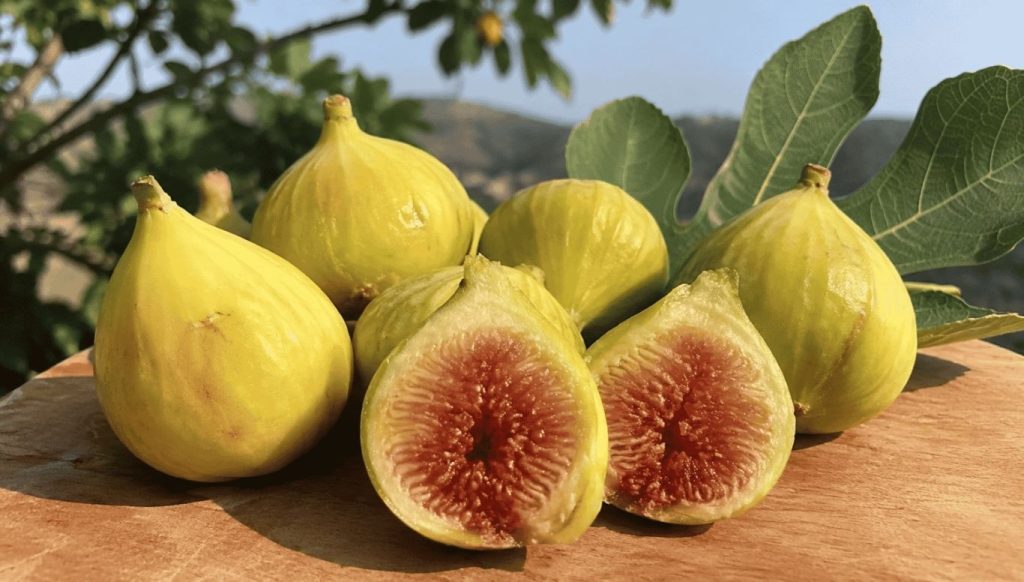
Byadi is a heritage variety of Ficus carica, the common edible fig. It comes from the Levant region of the Middle East, where fig cultivation stretches back more than 5,000 years. The name Byadi comes directly from the Arabic word “Abyad” (أبيض), meaning white. The word describes the fruit’s pale exterior, which stays light green or yellowish green even when fully ripe.
Unlike most figs you find in stores, Byadi was never selected for shipping. It was selected for taste. And that difference is enormous. The fruit has soft, delicate skin, dense honeyed flesh, and a deep sweetness that develops fully only when left to ripen on the tree. Growers who have tried it often say it belongs in a different category from commercial fig varieties entirely.
Quick Facts
| Feature | Details |
| Common Name | Byadi Fig |
| Alternative Spellings | Bhyadi, Biadi, Fallahi |
| Botanical Name | Ficus carica |
| Origin | Mishtayeh, Syria; northern Lebanon; Jordan |
| Name Meaning | From Arabic “Abyad” meaning white |
| Skin Color | Light green to yellowish green |
| Flesh Color | Golden amber to honey yellow |
| Flavor | Rich, mellow, honey-sweet |
| Pollination | Self-fertile (common fig type) |
| Harvest Season | Early to mid-summer |
| Best Use | Fresh eating, sun drying, jam |
| Container Friendly | Yes |
| Climate | Mediterranean and warm temperate |
| USDA Zones | 7 to 10 |
Where Does the Byadi Fig Come From?
The most documented origin of the Byadi fig is the village of Mishtayeh (al-Mishtaya), a small Greek Orthodox Christian community in northwestern Syria, in the Homs Governorate, west of Homs and north of the Lebanese border. The village sits inside the region known as the Valley of Christians, home to Saint George’s Monastery, one of Syria’s most significant historic sites.
From this Levantine heartland, Byadi spread across Lebanon and Jordan over centuries of agricultural exchange. The variety is so widely known across the region that many different local strains now carry the same name. You can find several distinct Byadi types in Lebanon alone, each from a different village or valley, all sharing the same essential identity: a white honey fig with exceptional taste.
American horticulturist Ira J. Condit (1883–1981), the most important fig researcher of the 20th century and author of the definitive monograph The Fig, documented the Byadi variety in his scholarly work. He also established that Syria and Anatolia are the original natural habitats of the fig tree, from which it was carried to North Africa, Spain, California, Mexico, Chile, and Peru. In other words, Byadi’s homeland sits at the very cradle of global fig cultivation.
The Name Defines a Type, Not Just One Tree
One of the most important things to understand about Byadi is that it is not one single genetically identical clone. Across the Levant, the word “Byadi” has been applied to any fig that is white or light-colored in skin with honey-colored flesh.
Bassem Samaan, a fig collector and founder of the nursery Trees of Joy in Pennsylvania, was among the first to formally document and share Middle Eastern fig varieties with North American growers, including Byadi. His work helped introduce authenticated cuttings from Mishtayeh, Syria, to collectors across the United States.
Because the name is descriptive rather than botanical, dozens of regional strains all legally claim it. The Syrian strain from Mishtayeh is the most documented, while Lebanese strains from the coastal regions and from Wadi Qannoubine in the Qadisha Valley are widely grown and equally celebrated.
Read more: Kouskousi: The Maltese Pasta Most People Get Wrong (2026)
What Does Byadi Taste Like?
Taste is where Byadi earns its reputation. The fruit delivers a deep, mellow honey sweetness when fully ripe on the tree. The flavor is often compared to White Marseilles (also called the Italian Honey Fig), a well-known Western variety, but growers who have tasted both say the Syrian Byadi has a softer texture and noticeably fewer seeds.
Flavor Notes You Can Expect from a Ripe Byadi
The eating experience has several distinct qualities:
- A rich honey sweetness that builds as you bite through
- A smooth, almost jam-like interior with minimal graininess
- Very few noticeable seeds compared to other wide varieties
- A mild, clean finish without bitterness or tartness
- Subtle floral overtones, especially in fruit ripened in full sun
Think of a fig lover in the Lebanese mountain village of Ehden who picks a Byadi is from a family tree that has grown for four generations. The fruit is warm from the sun, split slightly at the base to show the amber interior. She eats it in two bites. That is what peak Byadi tastes like. No refrigeration, no waiting. Just the tree and the moment.
Flavor Compared to Other Common Varieties
| Variety | Sweetness | Texture | Seeds | Best Use |
| Byadi | Very high | Smooth, soft | Few | Fresh, dried, jam |
| Brown Turkey | Medium | Firm | Moderate | Fresh, baking |
| Black Mission | High | Dense | Moderate | Drying, fresh |
| White Marseilles | High | Medium | Few | Fresh eating |
| Kadota | Medium | Firm | Few | Canning, fresh |
What Is Byadi?
Byadi is a heritage honey fig variety from the Levant region of the Middle East, originating in Syria, Lebanon, and Jordan. Its name comes from the Arabic word “Abyad,” meaning “white.” The fruit has pale green skin, golden amber flesh, and a rich honey flavor. It is self-fertile and well-suited to container growing and home gardens.
The Byadi Fig Tree: How It Grows
Byadi trees grow with a vigorous, upright habit. They tend to form a strong central trunk that makes them easy to train as a standard tree. This growth pattern also makes Byadi more attractive in a home landscape than the bushy, spreading structure of some other fig varieties.
Leaves and Tree Appearance
The foliage is large and fragrant, with the deeply lobed, five-fingered shape typical of Ficus carica. The leaves are visually striking and provide good shade under the canopy. When the tree drops its leaves in autumn, the strong branching structure remains clearly visible, giving it year-round ornamental interest.
Self-Fertile Pollination
Byadi belongs to the common fig group, meaning it does not require the specialized fig wasp Blastophaga psenes for pollination. A single tree produces fruit reliably every year without needing a second tree or any pollinator nearby. This characteristic makes it far more practical for home growers than caprifig-pollinated varieties, which require a separate male tree and the presence of specific wasps.
Harvest Timing
Byadi is an early to mid-season variety. In its native Mediterranean climate, the main crop ripens between mid-June and mid-July. In cooler climates, fruiting may extend into August. The fruit ripens in a concentrated window, so growers often harvest multiple times each week at peak season.
How to Grow Byadi: A Practical Guide
Growing Byadi is straightforward when you match its basic needs. The variety is forgiving, productive, and rewarding for growers at all experience levels.
Step-by-Step Growing Checklist
Follow these steps for a healthy, productive Byadi tree:
- Choose your location. Select a spot with 6 to 8 hours of direct sunlight daily. South-facing walls in cooler climates create a warm microclimate that suits Byadi perfectly.
- Prepare the soil. Use well-drained soil with a pH between 6.0 and 6.5. Add organic compost to improve structure if your soil is heavy or clay-based.
- Plant at the right time. Spring planting after the last frost gives the tree a full growing season to establish before its first winter.
- Water consistently during fruit development. Regular deep watering during fruit swelling improves size and prevents splitting. Reduce watering as the fruit nears ripeness to concentrate sweetness.
- Fertilize lightly. A balanced fertilizer in early spring encourages healthy growth. Avoid heavy nitrogen feeding, which promotes leafy growth at the expense of fruit.
- Prune annually. Light pruning in late winter removes crossing branches and opens the canopy to light. This encourages productive new growth.
- Harvest at full ripeness. Wait until the fruit hangs downward, feels slightly soft, and may show small cracks at the base. This is peak Byadi.
Growing Byadi in Containers
Byadi is one of the best fig varieties for container cultivation. The tree adapts well to pot life and can begin fruiting within one to two years of planting, even in a large container. Choose a pot at least 45 centimeters wide and deep. Use a free-draining potting mix, and repot every two to three years as the tree grows.
Container growing lets you move the tree indoors during harsh winters, which matters for gardeners in USDA zones 5 and 6, where outdoor survival is unreliable. Many fig collectors in the UK and northern Europe grow Byadi successfully in pots on patios and in unheated greenhouses.
Can You Grow Byadi in a Container?
Yes. Byadi is widely considered one of the best fig varieties for container growing. It adapts well to pot life, produces fruit within one to two years, and can be moved indoors in cold climates. Use a large pot with well-draining soil, give it full sun, water consistently during fruiting, and prune each winter lightly to keep it productive and manageable.
Why You Can’t Buy Byadi at the Supermarket
This is the question most people never think to ask. If Byadi tastes so exceptional, why is it impossible to find in stores?
The answer is its skin. Byadi has very soft, thin, delicate skin that bruises easily during handling and transport. Commercial fig distribution requires fruit that can survive picking machines, cold storage, long-distance shipping, and weeks on a shelf. Byadi survives none of that. The moment it reaches full ripeness, the clock starts ticking in hours, not days.
This is actually what makes Byadi so special. It was never engineered for commerce. It was cultivated for generations by families who grew it, ate it, dried it in the sun, or turned it into jam while it was still perfect. The entire supply chain for Byadi is the family garden and the kitchen table, not a freight truck and a distribution center.
According to the Food and Agriculture Organization (FAO), global fig production exceeded 1.35 million metric tons in 2025. The overwhelming majority of that volume comes from commercial varieties bred for shipping durability. Heritage types like Byadi represent a tiny and precious fraction of total production.
The Mistake Most Byadi Growers Make in 2026
Harvesting too early. It is the single most common error, and it destroys the entire flavor profile.
Byadi figs that are harvested before full ripeness are watery, mildly sweet at best, and completely fail to deliver the honey intensity the variety is known for. Many first-time growers pick the fruit when the skin turns yellow-green, assuming it must be ready. It is not.
The correct signal is a combination of three things: the fruit hangs downward under its own weight, it yields slightly to gentle pressure near the base, and small cracks may appear at the bottom where the eye is. At that point, the sugar concentration inside is at its peak, and the flavor is extraordinary.
Growers on active fig forums have repeatedly documented this lesson. Even with three inches of rain the night before harvest, a not-quite-ripe Byadi tastes watered down and flat. But a perfectly ripe Byadi, harvested on the right morning, is a completely different experience.
Nutritional Benefits of Byadi Figs
Byadi is not just a pleasure to eat. It also delivers meaningful nutritional value. According to the United States Department of Agriculture (USDA) nutritional database, raw figs per 100 grams provide approximately 74 calories, 1.9 grams of fiber, 16 grams of natural sugar, and useful amounts of potassium, calcium, magnesium, vitamin B6, and vitamin K.
The fig market reflects this value. The global fresh figs market was valued at $1.4 billion in 2024 and is projected to grow at a compound annual growth rate of 4.9 percent through 2034, according to Grand View Market Insights (March 2025). This steady growth is driven by rising consumer demand for natural, minimally processed, nutrient-dense foods. Heritage varieties like Byadi sit at the premium end of that trend.
Figs also contain polyphenol antioxidants, including chlorogenic acid and quercetin, which research associates with reduced inflammation and improved cardiovascular function. Dried Byadi, a traditional preservation method used throughout the Levant, concentrates these nutrients further while extending shelf life to months.
Culinary Uses: How to Eat and Use Byadi Figs
Byadi is extraordinarily versatile in the kitchen. Its natural sweetness means it rarely needs added sugar in any preparation.
Fresh Eating
The simplest and most satisfying way to enjoy Byadi is straight from the tree. Rinse it gently, bite through the skin, and eat it whole. Pair it with fresh labneh (strained yogurt cheese), aged hard cheese, or thin slices of cured meat. The honey sweetness of Byadi plays beautifully against salt and fat.
Sun Drying
Traditional sun drying is the most important preservation method for Byadi across the Levant. Ripe figs are halved and laid on clean trays under full sun for several days until they become semi-transparent and intensely sweet. Dried Byadi can be stored for months and eaten as a snack, added to grain dishes, or combined with nuts and seeds in traditional sweets.
Jam and Preserves
Byadi makes exceptional fig jam. Because the fruit is already very sweet and has few seeds, it requires minimal preparation. A simple recipe uses fresh Byadi, lemon juice, and a small amount of sugar, cooked low and slow until thick. The result is a deep amber jam with a honey flavor that tastes unlike any commercial fig spread.
Baking and Cooking
Byadi works well in flatbreads, pastries, and slow-cooked savory dishes. Whole or halved figs placed on pizza with blue cheese and honey, or folded into a tart with almond cream, showcase the variety’s rich sweetness as a dessert ingredient.
Byadi vs. Other Middle Eastern Fig Varieties
The Levant is home to many celebrated fig varieties, and Byadi sits among the finest. Understanding its neighbors helps place it clearly.
| Variety | Origin | Flavor | Color | Season |
| Byadi | Mishtayeh, Syria / Lebanon | Honey sweet | Light green | Early summer |
| Barada | Sidnaya, Damascus, Syria | Honey, medium | Light green | Mid-summer |
| Shtawi | Koura, Lebanon | Very sweet | Dark | Late autumn |
| Sumaki | Syria | Rich, spiced | Purple-red | Mid-summer |
| Lebanese Red | Coastal Lebanon | Excellent | Red-purple | Two crops/year |
How Byadi Is Spreading Beyond the Middle East in 2026
In June 2026, Byadi is no longer confined to the Levant. Collectors across the United States, Europe, Australia, and Vietnam are actively growing authenticated Byadi cuttings sourced from nurseries like Trees of Joy in Pennsylvania, which has been instrumental in distributing Middle Eastern fig genetics to the broader fig-growing community.
Online communities at ourfigs.com and figdatabase.com have documented Byadi trees fruiting in Seattle, Pennsylvania, and Vietnam. The fig’s adaptability to containers makes it achievable for growers far outside its native zone.
As global interest in heritage and heirloom food varieties grows, Byadi represents exactly what this movement values: a variety with a real place of origin, a documented history, extraordinary flavor, and a connection to traditional food culture that no commercial variety can replicate.
Read more: Axurbain: The Legacy of French Urban Furniture Design 2026
FAQs
What does the name Byadi mean in Arabic?
Byadi comes from the Arabic word “Abyad” (أبيض), which means white. The name refers to the fruit’s pale green or yellowish-green skin color, which stays light even when fully ripe.
Where does Byadi originally come from?
The most documented origin is the village of Mishtayeh (al-Mishtaya) in the Homs Governorate of northwestern Syria. The variety is also found across northern Lebanon, Jordan, and other parts of the Levant.
Is there only one type of Byadi fig?
No. “Byadi” is a descriptive name applied across the Middle East to any white or light-colored honey fig. There are multiple regional strains in Lebanon, Syria, and Jordan, all called Byadi but slightly different genetically.
What does a ripe Byadi fig look like?
A ripe Byadi hangs downward, feels slightly soft near the base, and may show small cracks around the eye at the bottom. The skin stays light green or yellowish-green. Inside, the flesh is golden amber to honey yellow.
Why can’t I find Byadi figs in stores?
Byadi has very soft, delicate skin that bruises easily and does not survive commercial handling, long-distance shipping, or extended cold storage. It is a fresh-eating variety best consumed the day it is harvested.
How long does it take a Byadi tree to produce fruit?
Container-grown Byadi trees can produce fruit within one to two years of planting. In-ground trees in warm climates may fruit in their first or second season. The variety is known for early and consistent productivity.
What climate does Byadi need to thrive?
Byadi thrives in Mediterranean and warm temperate climates, ideally USDA hardiness zones 7 to 10. It needs full sun for 6 to 8 hours daily and well-drained soil. It can be grown in containers in cooler zones and brought inside for winter.
Is Byadi a self-fertile fig?
Yes. Byadi is a common fig that does not require the fig wasp or a second tree for pollination. A single tree reliably produces fruit each year.
What is the best way to eat Byadi figs?
Fresh off the tree is the finest option. Byadi is also excellent sun-dried, made into jam, paired with cheese and cured meats, or used in baked goods. It works in any preparation where a deeply sweet, honey-flavored fig is desirable.
How does Byadi compare to Brown Turkey or Black Mission figs?
Byadi is considerably sweeter and softer than Brown Turkey, with a more intense honey flavor and fewer seeds. Compared to Black Mission, it is lighter in color, milder in richness, but more floral and delicate. Both Black Mission and Brown Turkey were selected for commercial durability. Byadi was selected purely for flavor.
Can Byadi figs be dried at home?
Yes. Traditional sun drying is the most common preservation method. Halve ripe Byadi figs and lay them on clean trays in full sun for several days until they become concentrated and semi-transparent. They can also be dried in a food dehydrator at low temperature.
Who documented the Byadi fig scientifically?
American horticulturist Ira J. Condit (1883–1981) described Byadi in his monograph The Fig, noting that the name signifies “white” and that the variety produces medium, spherical fruit with light green skin, light pink pulp, sweet flavor, and few seeds. He noted it was mainly used for drying.
Conclusion
Byadi is one of the finest honey figs in the world and one of the least known outside the Middle East. Born in the villages of Syria and Lebanon, cultivated for thousands of years in the same soil where the fig tree first grew wild, it has survived not because of commerce but because of taste. People who eat it once tend not to forget it.
In June 2026, with heritage food culture growing rapidly and fig collectors sharing authenticated cuttings across continents, Byadi is finally reaching the audience it deserves. If you can grow one, do. If you can find fresh fruit at a local farm or community garden, do not hesitate.
Byadi is proof that the most extraordinary things are often the ones never designed to leave home.
For more background on the botanical history of the fig tree, visit the common fig article on Wikipedia.

Hi, I’m Sidra Azeemi, a freelance content writer and guest post specialist with 3+ years of experience. I offer content writing and on-page SEO services. I write about celebrities, net worth, and entertainment.