Table of Contents
Most people have heard of basmati. Far fewer know about the rice that feeds millions of Bengali families every single day, tastes better with fish curry than any imported grain, and now sits on fine-dining menus in Kolkata and Dhaka. In May 2026, banskathi rice is having a quiet but real moment.
According to APEDA, India exported over 14 million metric tons of non-basmati rice in the 2024-25 fiscal year, worth more than USD 6.5 billion, and traditional aromatic varieties like banskathi are a growing part of that story. If you cook Bengali food, eat it, or simply want to understand what makes this grain special, this guide covers everything.
Banskathi rice is a premium non-basmati aromatic rice grown primarily in the Birbhum and Bankura districts of West Bengal, India. It has long, slender grains, a subtle natural fragrance, a mildly sweet taste, and a soft, non-sticky texture after cooking. It is used daily in Bengali and Bangladeshi homes as well as in festive dishes like khichuri, pulao, and home-style biryani.
What Is Banskathi Rice?
Banskathi rice is one of West Bengal’s most respected traditional rice varieties. The name connects directly to the region where it was first cultivated and developed over generations. Farmers in Birbhum and Bankura grew it for local use long before it became widely traded.
It is classified as a non-basmati aromatic rice. That means it has a natural fragrance without the intense, bold scent of basmati. Its aroma is softer, almost floral, which makes it pair beautifully with the delicate spice profiles of Bengali cooking.
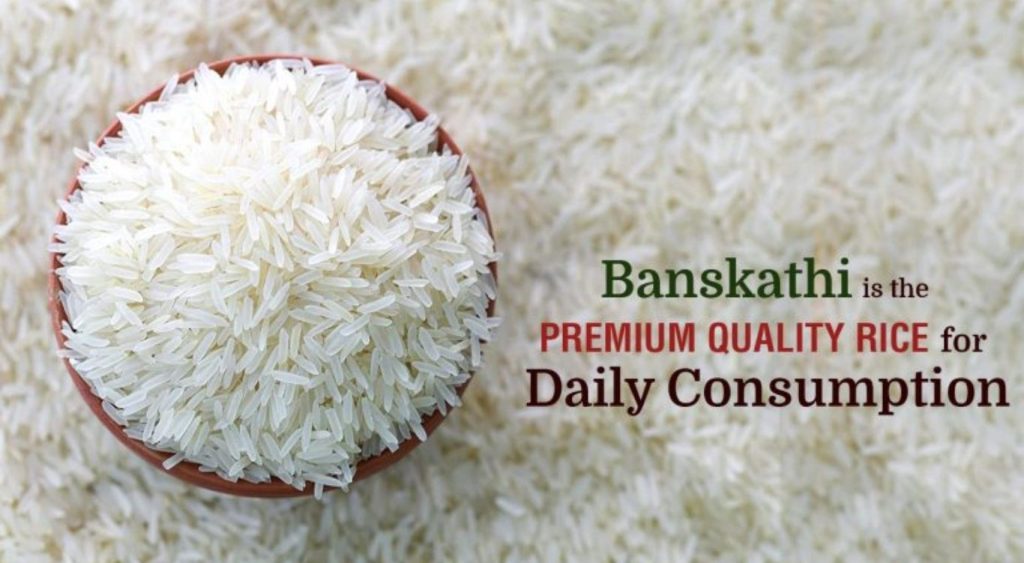
The grain itself is long and slender. After cooking, it becomes milky white, fluffy, and separate. It does not clump or stick together, which is exactly what Bengali cooks want when serving rice alongside fish curry, dal, and seasonal vegetables.
How Did Banskathi Rice Get Its Name?
The name banskathi comes from the area of its origin in West Bengal. Like many traditional Indian food names, it is a geographic marker, a way of saying: this rice comes from here, was grown by these people, and belongs to this land.
According to Heralds Post’s October 2025 report on Bengal’s heritage grains, the origin of banskathi rice traces back to pre-independence Bengal, when small-scale farmers grew it primarily for local use. Commercial cultivation in Birbhum and Bankura expanded in the 1990s after better irrigation systems and support from Krishi Vigyan Kendras (KVKs) helped farmers boost yields. By 2020, APEDA officially recognized banskathi rice as one of India’s premium aromatic rice varieties.
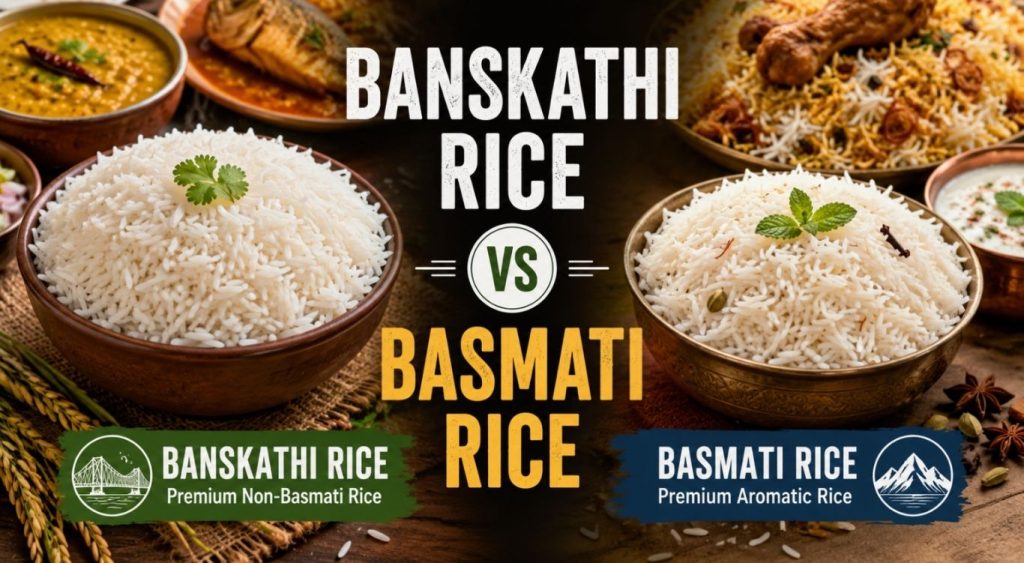
Banskathi Rice vs Basmati Rice: What Actually Makes Them Different?
This is the question most people have, and it deserves a clear, honest answer.
| Feature | Banskathi Rice | Basmati Rice |
| Aroma | Mild, subtle, slightly floral | Strong, bold, nutty |
| Grain length | Long to medium | Extra-long |
| Texture after cooking | Fluffy, separate, soft | Elongated, firm, separate |
| Taste | Mildly sweet, delicate | Nutty, distinct |
| Price | More affordable | Premium priced |
| Best use | Daily meals, Bengali dishes, khichuri, pulao | Biryani, pilaf, special occasion rice |
| Growing region | West Bengal (Birbhum, Bankura) | Himalayan foothills (Punjab, Haryana, UP) |
| Classification | Non-basmati aromatic | Basmati |
The biggest practical difference is how they perform in Bengali cooking. Basmati is designed to elongate dramatically and carry bold spice flavors. Banskathi absorbs the gentle flavors of fish curry, dal, and ghee without overpowering them. For everyday Bengali meals, banskathi often feels more natural on the plate.
The Two Main Types of Banskathi Rice You Will Find in 2026
Understanding which form of banskathi rice to buy changes both the cooking experience and the nutritional value of your meal.
Raw White Banskathi Rice (Chaal)
This is the most common form. The grain is milled, polished, and ready to cook. It cooks faster than parboiled versions and gives a clean, white, delicate result on the plate. Raw banskathi works best for soft plain rice, Bengali pulao, and dishes where a gentle texture and light color matter.
The aroma is fresh and mild. Many families prefer raw banskathi for everyday meals because it feels lighter in the stomach and pairs naturally with soupy dals and fish curries.
H4: How to Choose Quality Raw Banskathi
Look for grains that are uniform in length, clean, and bright white. Premium raw banskathi should have very few broken grains and almost no dust. A strong musty smell is a warning sign of poor storage. Fresh, good-quality banskathi smells clean and faintly floral, even before cooking.
Parboiled Banskathi Rice (Seddho Chaal / Husking Rice)
Parboiling is a traditional process where the rice is soaked, steamed, and dried while still inside its outer husk, before milling. This forces nutrients from the bran layer into the grain. The result is a rice that retains significantly more vitamins, minerals, and fiber than polished white rice.
Parboiled banskathi has a slightly firmer texture and a more golden color. It takes a little longer to cook. Brands like Bangla Local and Lalbaba Rice market their parboiled banskathi with claims of 50% lower carbohydrates than standard white rice and a lower glycemic index, making it a popular choice for people managing blood sugar levels.
Pragati Edible, a Bengal-based rice brand, notes that quality parboiled banskathi should have a rich aroma even before cooking, should be free of any grain disease, and should not feel chewy or rubbery after thorough cooking. These are the real markers of good parboiled banskathi.
Banskathi Rice Nutrition: What You Are Actually Eating
Banskathi rice is primarily an energy food. Its main contribution to your diet is complex carbohydrates, which fuel the body steadily throughout the day. This makes it well suited to physically active people, farmers, students, and anyone who needs sustained energy.
The full nutritional profile, especially in parboiled form, includes:
- Complex carbohydrates for steady energy
- Moderate protein, which improves when paired with lentils or fish
- Dietary fiber that supports digestion and gut health
- B-complex vitamins including thiamin, niacin, riboflavin, and folate
- Minerals including iron, magnesium, zinc, selenium, potassium, and calcium
- Anthocyanins in some less-polished forms, which are antioxidant compounds
Banskathi is naturally gluten-free, making it suitable for people who avoid gluten for health or dietary reasons. It is also free from artificial flavoring, which many health-focused consumers now actively look for when choosing traditional grains over processed alternatives.
Read more: Duke Nicholson Inside the Rise of Jack’s Movie-Nerd Grandson
The Health Benefits of Banskathi Rice Worth Knowing
Parboiled Banskathi and Blood Sugar Control
This is the most important health point for many buyers. Parboiled banskathi rice has a lower glycemic index than most standard polished white rice varieties. A lower glycemic index means the rice raises blood sugar more slowly after eating. This steadier release is better for sustained energy and is often recommended for people managing diabetes or insulin sensitivity.
The key is pairing: even banskathi with a modest glycemic index should be eaten alongside protein and fiber-rich foods, such as dal, fish, or vegetables, to further slow glucose absorption. Eating it alone in very large portions removes most of its blood sugar advantage.
Fiber and Digestive Support
Less-polished and parboiled forms of banskathi contain more fiber than highly milled white rice. Dietary fiber supports regular digestion, feeds beneficial gut bacteria, and may reduce the risk of constipation. Some nutrition sources describe parboiled rice as mildly prebiotic in effect, meaning it can support a healthier gut microbiome over time.
Clean, Additive-Free Grain
One reason banskathi rice is gaining new attention in 2026 is the growing consumer preference for traditional, minimally processed foods. Brands selling premium banskathi emphasize that quality products contain no additives, no artificial fragrance, and no chemical treatment. For families trying to reduce their reliance on heavily processed products, banskathi rice offers a natural, clean alternative.
What Is Banskathi Rice Used For?
Banskathi rice is used for daily home meals, festive dishes, and special cooking occasions across Bengali and Bangladeshi households. Its most common uses are plain boiled rice served with fish curry and dal, Bengali khichuri, vegetable or chicken pulao, fried rice, and home-style biryani. Its non-sticky, fluffy texture makes it well-suited for any dish where the grains need to stay separate.
The Role of Banskathi Rice in Bengali Culture and Festivals
Rice is not just food in Bengal. It is identity, ritual, and memory. Nearly 5,000 years ago, paddy cultivation arrived in Bengal from Southeast Asia, according to culinary historians cited in Sahapedia’s research on the Bengali platter. Since then, rice has remained the absolute center of every Bengali meal, every religious ceremony, and every significant life event.
Banskathi rice plays a specific cultural role in some of West Bengal’s most important occasions.
Durga Puja Bhog
During Durga Puja, the most celebrated festival in West Bengal, communities prepare large communal meals called bhog to offer to the goddess and share with devotees. The centerpiece is almost always khichuri: a slow-cooked mixture of rice and lentils cooked with ghee, spices, and sometimes vegetables.
Banskathi rice is prized for bhog khichuri because its grain structure holds up during long communal cooking without turning to mush, and its mild aroma enhances the ghee and spices without fighting them. By 2024, several fine-dining restaurants in Kolkata had started branding banskathi as the traditional grain of Durga Puja, according to The Herald Post.
Monsoon Comfort Cooking
In Bengal, the monsoon season brings a specific craving for khichuri. Rain, thunder, and a pot of khichuri on the stove is almost a cliché because it is genuinely how millions of Bengali families mark rainy afternoons. The bhog er khichuri version incorporates coconut and raisins alongside the rice and moong dal, making it a festive comfort dish that is simultaneously humble and special.
How to Cook Banskathi Rice Perfectly Every Time
Most cooking failures with banskathi rice come from two mistakes: skipping the soak and using too much water. Fix both, and the results improve dramatically.
Step 1: Wash the rice. Rinse under cold running water two or three times until the water runs mostly clear. This removes surface starch and reduces clumping.
Step 2: Soak before cooking. For raw banskathi, soak for 20 to 30 minutes. For parboiled banskathi, soak for 30 to 45 minutes because the firmer grain benefits from more time. Drain completely before cooking.
Step 3: Use the right water ratio. A 1:1.75 ratio works for most raw banskathi (1 cup rice to 1.75 cups water). Parboiled banskathi may need slightly more water, around 1:2. Both ratios can vary slightly depending on the age of the grain and the brand. Older rice typically needs a little more water.
Step 4: Cook on medium heat. Bring to a boil, then reduce to the lowest possible heat. Cover tightly and cook until all water is absorbed.
Step 5: Rest with the lid on. After the water is absorbed, turn off the heat and let the rice sit covered for 10 minutes. This is where the grains finish steaming and separate. Do not skip this step.
Step 6: Fluff gently. Use a fork or the back of a spoon to lightly separate the grains before serving.
The Best Dishes to Make With Banskathi Rice
Bengali Khichuri
Khichuri is banskathi’s most celebrated dish partner. Moong dal and banskathi rice are cooked together with turmeric, ginger, green chili, and a generous amount of ghee. The result is thick, warming, and deeply satisfying. Think of it as Bengali comfort food at its purest. The grain structure of banskathi absorbs the dal beautifully without disintegrating, giving the final dish the right balance of soft and substantial.
Bengali Pulao
For pulao, the grains must stay separate and carry spices elegantly. Banskathi does this well because its texture resists clumping even when cooked with ghee, raisins, cashews, and whole spices. A well-made Bengali pulao with banskathi rice has an almost silky quality: each grain glistening and separate, fragrant with cardamom and bay leaf.
Home-Style Biryani
Think of a family in Kolkata making biryani for Eid, a wedding, or a special Sunday lunch. They probably cannot afford to buy enough premium basmati for 20 people. Banskathi gives them a genuinely tasty result at a realistic price. Its mild aroma does not compete with the spice blend, and its grain structure holds during the long dum cooking process.
Fried Rice
Since the grains stay separate even after cooling, banskathi is excellent for fried rice. Leftover banskathi rice from the previous day, tossed with eggs, vegetables, soy sauce, and a little sesame oil, gives a cleaner, less starchy result than stickier rice varieties.
The Mistake Everyone Makes When Storing Banskathi Rice
Here is something no competitor article covers properly: how you store banskathi rice matters as much as how you cook it. Poor storage destroys the aroma, attracts insects, and can make the grain smell stale or musty before you even open the bag.
The three enemies of good rice storage are moisture, heat, and light. A bag of banskathi left near a stove or in direct sunlight will lose its aroma within weeks. A bag left partially open in a damp kitchen will start attracting rice weevils within a month.
Store banskathi rice in a clean, airtight container, away from sunlight, heat, and any moisture source. A ceramic jar or sealed plastic container in a cool pantry or cabinet is ideal. If you buy a large 10 kg bag, transfer a smaller working amount into a daily-use container and keep the rest fully sealed.
Before cooking any batch, smell the rice. Fresh, good-quality banskathi smells clean and faintly floral. A musty, stale, or sour smell means the storage conditions were poor. Do not cook rice that smells wrong. The aroma is lost, and more importantly, the nutritional quality may be compromised.
Read more: Rainer Andreesen: Inside the Canvas of the Master Portrait Artist
Why Banskathi Rice Is Gaining Global Attention in 2026
Banskathi was once almost entirely a regional product, known mainly within West Bengal and among the Bengali diaspora. That is changing.
Around 35,000 farmers in Birbhum and Bankura depend on banskathi cultivation, according to Heralds Post’s October 2025 research. Their average income has risen by approximately 22% since 2019 as domestic demand grows. Local cooperatives now connect farmers directly with exporters, removing middlemen and increasing farmer earnings. The Indian Council of Agricultural Research (ICAR) and APEDA have provided training on pest control and grain storage to help improve quality and export readiness.
The Indian Rice Exporters Federation (IREF) reported in November 2025 that total rice exports are expected to jump 16% to 23.5 million metric tons in 2025-26. A growing share of that volume involves premium non-basmati aromatic varieties like banskathi, destined for markets in Bangladesh, the UAE, and Singapore.
The trend behind this growth is global. Consumers worldwide are increasingly seeking traditional, minimally processed grains with authentic regional identity. Banskathi fits that search perfectly.
How to Buy the Best Banskathi Rice: A Practical Guide
Not all banskathi sold online or in stores is the same quality. Here is what to actually look for.
Check the grain: Good banskathi has long, uniform grains with very few broken pieces. A high proportion of broken grains is a sign of poor processing or rough handling.
Look for the processing method clearly labeled: Premium banskathi will specify whether it is raw (chaal), parboiled (seddho chaal), husked, or hand-pounded. Each type has different cooking times and nutritional profiles.
Buy from trusted sellers: Brands worth knowing in this category include Bangla Local, Lalbaba Rice, Pragati Edible, Dainik, and Barman Rice Brand. All sell banskathi with specific quality certifications and clear grain descriptions.
Start small: If you are trying banskathi for the first time, buy a 1 kg or 2 kg pack before committing to a 10 kg bag. Cook a simple test batch with just water and observe the aroma, color, separation, and taste of the plain cooked grain. A good batch will smell clean and slightly floral, cook to a bright white, and separate at rest.
Avoid generic “Bengal rice” labels: Some sellers use vague labels to pass off inferior rice as a premium variety. Always look for the specific variety name “Banskathi” written clearly on the pack.
FAQ: Banskathi Rice Questions People Actually Ask
What is banskathi rice?
Banskathi rice is a traditional non-basmati aromatic rice variety from West Bengal, India. It is known for long, slender grains, a mild natural fragrance, a mildly sweet taste, and a fluffy, non-sticky texture after cooking. It is one of the most popular everyday rice varieties among Bengali and Bangladeshi families.
Is banskathi rice good for diabetics?
Parboiled banskathi rice has a lower glycemic index than standard polished white rice. This means it raises blood sugar more slowly. When eaten in moderate portions alongside protein and fiber, it is a better choice for blood sugar management than most regular milled white rice. Always consult a doctor for personalized dietary advice.
What is the difference between banskathi and gobindobhog rice?
Both are Bengali rice varieties, but they are very different. Gobindobhog is a short-grain, intensely aromatic rice used almost exclusively in sweets and sacred offerings. Banskathi is a long-grain, mildly aromatic rice used for everyday cooking, pulao, khichuri, and biryani. They are not interchangeable.
How do I cook banskathi rice properly?
Wash the rice two to three times, soak for 20 to 30 minutes, drain, then cook in a 1:1.75 ratio of rice to water on medium heat. Once the water is absorbed, let the rice rest covered for 10 minutes before fluffing. For parboiled banskathi, use slightly more water and soak slightly longer.
Is banskathi rice the same as miniket rice?
No. Miniket is a different non-basmati variety from West Bengal, known for its extra-fine, polished grain and sweet taste. Banskathi has a more traditional aroma and is slightly less polished. Both are popular in Bengali cooking but have different textures and flavor profiles.
Where can I buy banskathi rice outside India?
Banskathi rice is available at Indian and Bangladeshi grocery stores in major cities across the UK, UAE, Singapore, and the United States. It is also available on platforms like Amazon India and specialist South Asian grocery websites. Look for the specific variety name and reputable brand labels.
Can banskathi rice be used for biryani?
Yes. Banskathi works well for home-style Bengali biryani. Its grain structure holds up during slow cooking, and its mild aroma complements the spice blend without overpowering it. It is not a substitute for basmati in terms of fragrance, but it gives a genuinely satisfying biryani at a more accessible price.
How should I store banskathi rice?
Store in an airtight container in a cool, dry place away from sunlight and heat. Do not store near the stove or in damp areas. Transfer large purchases into a sealed container. Fresh banskathi should smell clean and mildly floral. A musty or stale smell indicates poor storage conditions.
Is banskathi rice gluten-free?
Yes. Like all rice, banskathi rice is naturally gluten-free. It is safe for people with celiac disease or gluten sensitivity as long as it is not processed in a facility that also handles wheat or gluten-containing grains.
Why is banskathi rice more expensive than ordinary rice?
Banskathi is grown in specific districts of West Bengal using traditional cultivation methods. Premium varieties are hand-pounded or stone-free processed, which adds labor and care to production. The grain’s quality, aroma, and cultural heritage all contribute to its higher price compared to mass-produced generic white rice.
Conclusion
Banskathi rice has fed Bengali families for centuries, and in May 2026 it is earning recognition far beyond the kitchens of West Bengal. Its mild aroma, fluffy texture, and clean taste make it one of the most versatile and satisfying everyday rice varieties available. The parboiled form adds genuine nutritional advantages, and the cultural depth behind every grain connects it to festivals, harvests, and family tables that stretch back generations.
If you are new to banskathi, start with a small bag of parboiled variety, cook it simply with a fish curry or dal, and let the grain speak for itself. If you already know it, this guide gives you the full picture of where it comes from, why it matters, and how to get the best from it every time.
Good rice is not about the most famous name. It is about the right grain for the right dish, cooked with the right care.
Learn more about the history and varieties of rice across the world on the Wikipedia page for rice.

Hi, I’m Sidra Azeemi, a freelance content writer and guest post specialist with 3+ years of experience. I offer content writing and on-page SEO services. I write about celebrities, net worth, and entertainment.