Table of Contents
Most people hear “kouskousi” and think it’s just another way to say couscous. It’s not. In May 2026, this tiny Mediterranean pasta is gaining serious attention from home cooks, food writers, and nutritionists alike. But most guides online still confuse where it comes from, how to cook it, and why it tastes so different from anything else in your pantry.
This article tells you exactly what kouskousi is, where it truly originates, how to cook it properly, and why swapping it into your regular meals is one of the smartest moves you can make this year.
What Is Kouskousi, Exactly?
Kouskousi is a tiny, round pasta bead made from durum wheat semolina. Each piece measures roughly 2 to 3 millimeters across. It looks like a grain or a seed, but it is pasta in every technical sense of the word.
You cook kouskousi by boiling it in salted water or broth, just like any other pasta. It becomes soft but holds a gentle bite. It absorbs liquid beautifully and soaks up every flavor around it, whether that’s garlic, herbs, tomato, or rich stock.
Many people confuse kouskousi with North African couscous because the names sound similar. They are two different foods. Couscous is steamed semolina granules with a fluffy, loose texture. Kouskousi is boiled pasta with a firmer, chewier feel. Steam one and boil the other, and you’ll immediately understand the difference.
Read also: Nimedes Guide 2026: Master the Unified Digital Workspace
Where Does Kouskousi Actually Come From?
Here is where most articles get the story wrong. Kouskousi does not originate in Greece. It comes from Malta, the small Mediterranean island nation sitting between Sicily and North Africa.
The Maltese Origin Story
The Maltese version of this pasta is called kusksu, and a reliable historical source dating back to the 18th century already references a peppercorn-shaped pasta as a staple in the Maltese diet. The pasta likely arrived during Malta’s Arab occupation, which is why the name echoes the Arabic word for couscous.
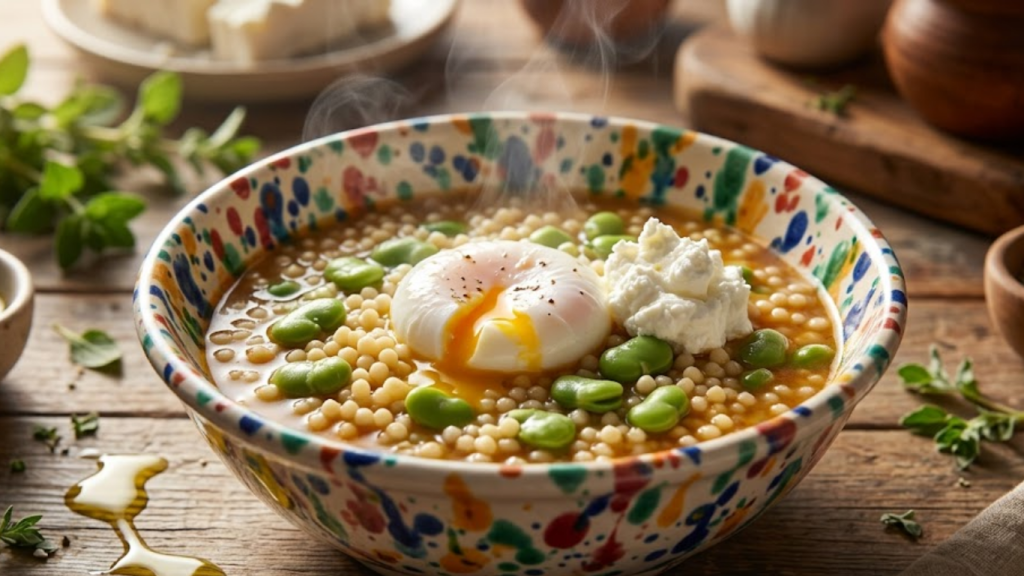
Over centuries, Maltese cooks developed kusksu into something entirely their own. The most famous dish it appears in is Kusksu bil-Ful, a spring soup made with fresh broad beans, the kusksu pasta beads, and ġbejniet (fresh Maltese goat’s milk cheese). In 2002, MaltaPost issued a series of stamps celebrating Maltese cuisine, and kusksu bil-ful was featured on one of them, cementing its place as a genuine cultural icon.
How It Spread Across the Mediterranean
From Malta, the pasta tradition spread through trade routes to the Greek islands, southern Italy, and beyond. In Sicily and Sardinia, a very similar pasta exists called fregola, which has a nutty taste because it is roasted before cooking. In Greece, small round pasta shapes became staples in home cooking, and the name kouskousi followed the food as it crossed borders.
Today, you’ll find regional versions of this pasta in Maltese kitchens, Greek homes, and Italian coastal towns. Each culture has made it its own while keeping the same core idea: a tiny, versatile pasta bead that makes simple ingredients taste extraordinary.
Read also: Enntal Guide 2026: Discover Austria’s Hidden Alpine Valley
Kouskousi vs. Couscous: The Key Differences Explained
Many cooks pick up the wrong product at the shop because the names look so alike. Here is a clear breakdown so you never mix them up again.
| Feature | Kouskousi | North African Couscous |
| Type | True pasta (wheat dough formed into beads) | Rolled semolina granules |
| Origin | Malta / Mediterranean | North Africa (Morocco, Algeria, Tunisia) |
| Cooking method | Boiled in water or broth | Steamed or soaked in hot water |
| Texture when cooked | Firm, slightly chewy | Soft, fluffy, loose |
| Best used in | Soups, stews, baked dishes | Alongside stews, with grilled meat |
| Size | 2 to 3 mm diameter | 1 to 2 mm diameter |
| Gluten | Yes (durum wheat) | Yes (semolina) |
The biggest practical difference is the cooking method. If you steam kouskousi like couscous, you’ll end up with hard, undercooked pasta. If you boil couscous like pasta, it becomes a soggy paste. Use the right method for each, and you’ll get perfect results every time.
How to Cook Kouskousi Perfectly Every Time
Kouskousi cooks fast. Most people overcook it because they treat it like a larger pasta shape. It needs 8 to 10 minutes in boiling water, not 15.
The Basic Boiling Method
Follow these steps for perfectly cooked kouskousi every time:
- Bring a pot of water to a full rolling boil and add a generous pinch of salt.
- Add the kouskousi and stir immediately to prevent sticking.
- Cook for 8 to 10 minutes, tasting from minute 7 onward.
- Drain and toss with a little olive oil right away to stop the beads from clumping.
- Use immediately, or spread on a tray to cool if you’re making a cold salad.
Cooking Kouskousi Directly in Broth
This method produces the most flavor. Pour enough broth (chicken, vegetable, or fish) into a pan to cover the pasta by about 2 centimeters. Bring it to a gentle simmer, add the kouskousi, and let it cook uncovered for 8 to 10 minutes. The pasta absorbs the broth as it cooks. You end up with a rich, creamy consistency without adding any cream at all.
Think of a home cook in Valletta preparing a weeknight dinner. She adds a handful of kouskousi to a pot of simmering chicken broth with a few wilted greens and a crushed garlic clove. Ten minutes later, she has a complete meal. No sauce, no fuss, and no flavor shortcuts needed.
Traditional Kouskousi Dishes Worth Knowing
Once you understand the basics, these dishes show you what kouskousi can really do.
Kusksu Bil-Ful (Maltese Bean Soup)
This is the dish that put kouskousi on the map. Kusksu soup is made primarily from seasonal broad beans, small pasta beads, and fresh ġbejniet (Maltese goat cheese), with eggs poached directly in the simmering soup itself rather than boiled separately.
The result is a bowl that feels hearty and light at the same time. The pasta beads thicken the broth slightly. The cheese melts into soft pockets. The poached eggs add richness without heaviness. It is the kind of food that feels restorative after a cold day or a long week.
Kouskousi with Chickpeas and Swiss Chard
This version is common in Greek home cooking. Cook kouskousi in vegetable broth. Add cooked chickpeas and roughly chopped Swiss chard leaves in the last two minutes. Finish with good olive oil, lemon juice, and a pinch of dried chili. It is a complete, balanced meal in one pot that takes under 20 minutes from start to finish.
Cold Kouskousi Salad
Cooked and cooled kouskousi makes a brilliant base for a summer salad. Toss it with diced cucumber, cherry tomatoes, chopped fresh mint, crumbled feta, and a simple lemon and olive oil dressing. The beads hold their shape well after cooling and don’t go mushy, as larger pasta shapes can.
Read more: Çbiri Guide 2026: Turkey’s Dual Tradition of Game and Cuisine
The Nutritional Value of Kouskousi
Kouskousi is a satisfying carbohydrate source that works well as part of a balanced diet. Per 100 grams of dry pasta, it provides roughly 350 calories, 12 grams of protein, 72 grams of carbohydrates, and 2 grams of fiber. It also contains B vitamins and iron.
Is Kouskousi Healthy?
Yes, especially when you pair it with vegetables, legumes, and healthy fats. On its own, it is a neutral carbohydrate. What makes it genuinely nourishing is what you cook it with. The traditional Maltese kusksu soup, for example, pairs the pasta with broad beans (high in protein and fibre), vegetables, and olive oil. That combination delivers a well-rounded meal with no processed ingredients at all.
The Mediterranean diet, the eating pattern kouskousi belongs to, has earned the top position in U.S. News and World Report’s Best Diets rankings for eight consecutive years as of 2025, which says a lot about how well this style of eating holds up under scrutiny.
For anyone managing their weight or blood sugar, kouskousi offers one practical advantage over refined white pasta: because the beads are dense and absorb liquid slowly, they tend to keep you full longer than lighter pasta shapes do.
The One Mistake Almost Every Kouskousi First-Timer Makes in 2026
Here is something no other guide mentions clearly enough: the biggest mistake people make with kouskousi is using the wrong liquid ratio and then walking away.
Because kouskousi beads are small and porous, they absorb water extremely fast. If you cook them in too much liquid and leave them sitting in the pot after draining, they continue to absorb moisture and turn into a starchy, clumped mass within minutes.
The fix is simple but specific:
- Use a 1:1.5 ratio of kouskousi to liquid (one cup of pasta to one and a half cups of water or broth).
- Set a timer for 8 minutes and check early.
- Drain the second they reach a firm, slightly chewy texture.
- Toss immediately with olive oil or a spoonful of butter.
- Serve within 10 minutes or spread out to cool on a tray.
A cook in Athens once described it this way: “Kouskousi waits for no one.” She was right. Unlike larger pasta that stays al dente for a few minutes after cooking, kouskousi moves from perfect to overcooked in about two minutes. Watch the timer and act fast.
What Is Kouskousi Used For in Modern Cooking?
Kouskousi has moved well beyond traditional soup kitchens. In May 2026, chefs and food creators are using it in grain bowls, warm breakfast porridges, and stuffed vegetable dishes. Its neutral flavor and quick cooking time make it one of the most adaptable ingredients a home cook can keep on hand.
Grain Bowls and Buddha Bowls
Layer cooked kouskousi with roasted sweet potato, chickpeas, wilted spinach, and a tahini drizzle. The beads sit underneath like a warm, flavor-absorbing base. Every bite delivers a different combination of textures.
Baked Kouskousi Dishes
You can bake kouskousi similarly to a Greek pastitsio or a baked orzo dish. Cook it halfway, mix with a tomato and meat sauce, top with béchamel, and bake until golden. Kouskousi holds its shape well in baked dishes because of its dense, pellet-like structure, which is why it works so well in the oven.
Breakfast Porridge
This surprises most people, but kouskousi makes a genuinely good hot breakfast. Cook it in warm milk with a little honey, cinnamon, and chopped walnuts. It takes five minutes and feels more substantial than oatmeal.
Where to Buy Kouskousi and What to Look For
Finding kouskousi outside Malta and Greece used to be difficult. In 2026, that has changed significantly.
You can now find kouskousi in:
- Mediterranean specialty food shops and delicatessens
- The international or world foods aisle of larger supermarkets
- Online retailers stocking Greek or Maltese food products
- Health food stores that carry whole-grain pasta varieties
When reading the label, look for “kouskousi,” “kusksu,” or “kouskousaki.” Some products are labelled as “Greek pearl pasta” or “Maltese pasta beads.” Check that the first ingredient is durum wheat semolina. Avoid products where starch or refined wheat flour appears first.
If you genuinely cannot find kouskousi, the closest substitute is Israeli couscous (also called pearl couscous or ptitim), followed by Sardinian fregola. Acini di pepe is another decent alternative for soups. None of these is identical, but they come close.
Quick-Answer: Does Kouskousi Contain Gluten?
Yes. Traditional kouskousi is made from durum wheat semolina, so it contains gluten. It is not suitable for anyone with celiac disease or a wheat allergy. Some producers now make gluten-free versions using rice flour or corn semolina, but these behave differently when cooked and may not hold up as well in soups.
Quick-Answer: How Long Does It Take to Cook Kouskousi?
Kouskousi takes 8 to 10 minutes in boiling salted water. If you cook it directly in broth, allow 10 to 12 minutes at a gentle simmer. Always taste from the 7-minute mark. The ideal texture is firm with a slight chew, not soft or mushy. Remove it from the heat the moment it reaches that texture.
Frequently Asked Questions About Kouskousi
Is kouskousi the same as couscous?
No. They look similar but are fundamentally different. Kouskousi is a true pasta made from durum wheat dough shaped into tiny beads and cooked by boiling. Couscous is made from semolina granules that are steamed. The textures, cooking methods, and origins are all different.
Where does kouskousi originally come from?
Kouskousi originates from Malta, a Mediterranean island between Sicily and North Africa. The pasta has been a Maltese staple since at least the 18th century. It later spread to Greece and southern Italy through trade and cultural exchange.
How do you pronounce kouskousi?
Say it as “koos-KOO-see.” The stress falls on the second syllable. In Maltese, the pasta is called “kusksu,” pronounced roughly as “KOOS-ksu.”
Can I substitute couscous for kouskousi in a recipe?
In a cold salad or a grain bowl, regular couscous can work as a substitute if you keep in mind the texture will be fluffier and softer. In soups or baked dishes, Israeli couscous (pearl couscous) is a closer substitute because it holds its shape better when cooked in liquid.
Is kouskousi good for weight loss?
It can be part of a weight-loss diet when eaten in reasonable portions alongside plenty of vegetables and legumes. Its dense texture helps with satiety. Traditional pairings with chickpeas, greens, and olive oil create filling meals without excessive calories.
What does kouskousi taste like?
On its own, kouskousi tastes mild and slightly wheaty, similar to plain pasta. Its real strength is how well it absorbs surrounding flavours. In a rich broth, it tastes deeply savory. In a lemon herb salad, it tastes bright and fresh. The pasta takes on whatever character you give it.
Can you cook kouskousi in broth instead of water?
Yes, and this is actually the better method for most dishes. Cooking kouskousi directly in chicken, vegetable, or fish broth infuses every bead with flavour from the inside out. Use a 1:1.5 ratio of pasta to broth and simmer gently until the pasta absorbs most of the liquid.
How do you store leftover cooked kouskousi?
Let it cool completely, toss with a small amount of olive oil to prevent sticking, then store in an airtight container in the fridge for up to 3 days. Reheat with a splash of water or broth in a pan over medium heat. Avoid microwaving it dry, as it turns rubbery.
Is kouskousi suitable for children?
Yes. Its small size, mild taste, and soft texture make it one of the better pasta shapes for young children. It works well in simple broths with soft vegetables and a little grated cheese. Because it cooks fast and is easy to eat, it is practical for quick family meals.
What is the difference between kouskousi and fregola?
Both are small, round, semolina-based pasta beads with a Mediterranean heritage. The key difference is that Sardinian fregola is toasted before it reaches you, giving it a nutty, slightly smoky flavor. Kouskousi is not toasted, so it has a more neutral taste. Fregola is slightly firmer and holds up especially well in long-simmered dishes.
Kouskousi deserves more kitchen time than it gets
In May 2026, there are very few ingredients that combine speed, versatility, and genuine cultural depth the way kouskousi does. It cooks in under ten minutes, pairs with almost anything, and carries a history that stretches back centuries across Malta, Greece, and the wider Mediterranean.
The key things to remember: it is pasta, not a grain; it needs boiling, not steaming; and it goes from perfect to overcooked in about two minutes, so never walk away from the pot. Get those three things right, and kouskousi will earn a permanent spot in your kitchen.
Good food does not need to be complicated. Sometimes it just needs to be understood.
For more on the history of Mediterranean pasta traditions, visit the Wikipedia article on Kusksu.

Hi, I’m Sidra Azeemi, a freelance content writer and guest post specialist with 3+ years of experience. I offer content writing and on-page SEO services. I write about celebrities, net worth, and entertainment.