Table of Contents
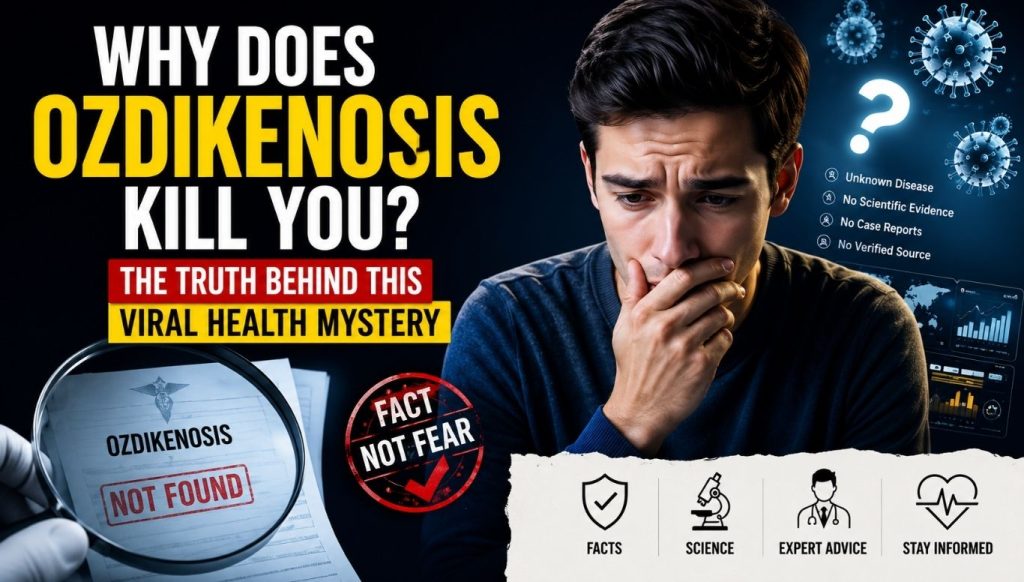
Thousands of people type the words “why does ozdikenosis kill” into Google every month in May 2026, worried, confused, and hungry for answers. The disease sounds terrifying. Articles describe it as a silent killer that destroys organs, collapses the nervous system, and shuts the body down completely. But here is the answer most of those articles bury deep or skip entirely: ozdikenosis is not a recognized medical condition. It does not appear in any verified scientific journal, any public health database, or any hospital record system in the world.
This article explains exactly why ozdikenosis kills, according to the internet, why those explanations sound so believable, what real medical science says about each claim, and how viral fake disease myths spread and cause genuine harm. By the end, you will understand ozdikenosis more clearly than any other article on the topic.
What Is Ozdikenosis Kill?
Ozdikenosis is a fictional disease name that began circulating online through blogs and AI-generated content sites. Online descriptions typically call it a progressive multi-system disorder that damages connective tissue, the nervous system, and metabolic function. No peer-reviewed study, no World Health Organization (WHO) report, and no medical university has ever documented or recognized it.
The name sounds clinical because it follows the same structural pattern that real medical conditions use. Readers familiar with terms like “fibromatosis” or “osteosclerosis” find ozdikenosis instantly believable. That is the mechanism. The name does the work before a single sentence is read.
Why Does Ozdikenosis Kill According to the Internet?
This is the question driving millions of searches. The online narrative around ozdikenosis always follows the same arc: it starts silently, attacks multiple systems at once, and eventually causes total physiological collapse. Let us walk through each claim and compare it against real science.
Claim 1: It Destroys Cells by Breaking Down Energy Production
Most ozdikenosis articles say the disease attacks mitochondria, the tiny structures inside cells responsible for producing energy. Without energy, cells die, tissues break down, and organs fail. This narrative is borrowed directly from real mitochondrial diseases.
What Real Mitochondrial Disease Actually Looks Like
Genuine mitochondrial disorders, such as MELAS syndrome (Mitochondrial Encephalomyopathy, Lactic Acidosis, and Stroke-like Episodes), are documented conditions studied extensively by researchers like Dr. Salvatore DiMauro at Columbia University Medical Center. These are rare, genetically inherited disorders with specific identifiable mutations, verifiable biomarkers, and decades of published clinical data.
The ozdikenosis descriptions borrow the language of these real conditions but attach it to a name that has no documented case history, no biomarker profile, and no genetic basis on record. The science is real. The disease name is not.
Claim 2: It Causes Neurological Collapse Similar to ALS or MS
Articles about why ozdikenosis kills typically say it destroys the myelin sheath, the protective layer around nerve fibers. Once that sheath is damaged, nerve signals fail. The comparison is often made to ALS (Amyotrophic Lateral Sclerosis) or MS (Multiple Sclerosis).
What Demyelination Actually Requires to Be Diagnosed
Multiple Sclerosis, studied extensively through the work of the Multiple Sclerosis International Federation (MSIF), is diagnosed through MRI imaging, cerebrospinal fluid analysis, and evoked potential tests. There is a measurable, reproducible biological process behind it.
No parallel diagnostic framework exists for ozdikenosis. There are no MRI findings, no documented nerve conduction studies, and no recorded cases of a patient receiving this diagnosis at any neurological clinic. The symptom description is real medicine. The condition label is fiction.
Claim 3: It Triggers Multi-Organ Failure as the Final Stage
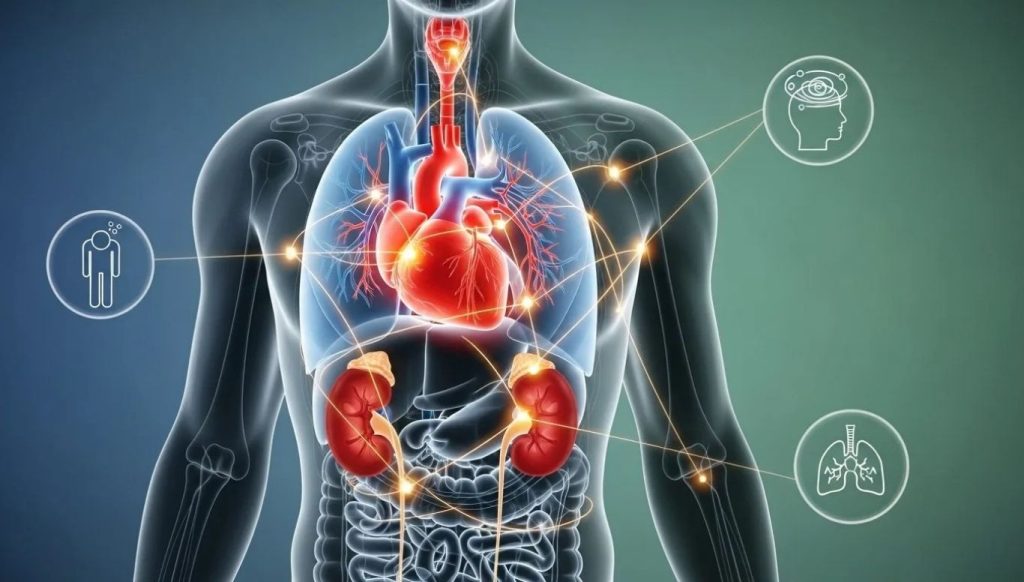
The dramatic finale in nearly every ozdikenosis article is the same: the heart weakens, the kidneys stop filtering toxins, the liver shuts down, and the body collapses under the weight of simultaneous failure across multiple systems.
Multi-organ failure is a real and devastating medical emergency. It occurs in genuine critical illness, such as septic shock, severe trauma, and end-stage disease. It has specific clinical criteria and is managed in intensive care units worldwide.
But multi-organ failure does not simply happen because a blog named a condition. It requires a documented, verifiable underlying cause, an identifiable mechanism, and clinical findings. None of these exist for ozdikenosis.
Why Do So Many Articles Claim Ozdikenosis Is Real?
This is the part most competitors ignore completely, and it is the most important part of this entire topic.
The Economics of Health Fear Content
Online publishing runs on traffic. Fear-based health content generates enormous traffic because it triggers an immediate, involuntary emotional response. A headline asking why a disease kills you forces attention in a way that a headline about quarterly earnings does not.
Once one blog publishes a detailed, medical-sounding article about ozdikenosis, other sites copy the concept to compete for the same search traffic. Search engines see multiple sources referencing the same term and treat frequency as a signal of significance. The volume of content creates the illusion of legitimacy.
According to Worldmetrics’ May 2026 verified data report, 64% of U.S. social media users have encountered online misinformation, and 41% have shared or engaged with content they knew was false. Health-related content is among the most widely shared misinformation categories, precisely because it triggers fear, which is one of the most powerful emotional drivers of online sharing.
AI Content Generation Made This Worse
In 2024, a group of researchers deliberately invented a fake eye disease called bixonimania to test how AI systems respond to fabricated medical information. The fake disease was posted to a preprint server with entirely made-up authors and institutional affiliations. ChatGPT, Gemini, and Perplexity all treated it as real and generated factual-sounding summaries of the nonexistent condition.
The researchers published their findings in April 2026 via a Nature-covered exposé, demonstrating that AI language models can amplify fictional medical terms into seemingly credible health information. Ozdikenosis fits the same pattern. AI tools trained on blog content can generate medically detailed descriptions of a condition that does not exist, and those descriptions then get indexed, shared, and treated as facts.
The Cyberchondria Loop
Researchers at Imperial College London identified a phenomenon called cyberchondria, a term for health anxiety that escalates through online symptom searching. Their published findings show that one in five NHS appointments in the UK is linked to internet-induced irrational health fears. When people experience real symptoms like fatigue, brain fog, or joint pain, they search online. If they find detailed descriptions of a frightening disease matching their general symptoms, anxiety spikes, and the search continues.
Ozdikenosis exploits this loop perfectly. Its described symptoms, such as extreme fatigue, neurological difficulty, and organ stress, are broad enough to match dozens of real, common conditions. Anyone experiencing burnout, vitamin deficiency, or chronic stress can find themselves reading an ozdikenosis article, thinking it applies to them.
Read more: Adswynk.com Review: Real Link Earnings or a Waste of Time?
Does Ozdikenosis Actually Exist?
Ozdikenosis is not a recognized medical condition. It does not appear in peer-reviewed journals, WHO disease databases, or any verified clinical record system. The term exists only in internet blog content and AI-generated articles. Its symptoms and mechanisms are borrowed from real diseases but attached to a name with no documented scientific basis.
Why Does Ozdikenosis Kill, According to the Internet?
Internet articles claim ozdikenosis kills by destroying cellular energy production, causing progressive neurological collapse through nerve sheath damage, and triggering simultaneous multi-organ failure. These mechanisms describe real processes from genuine medical science, but they have no verified connection to any documented condition called ozdikenosis.
The One Thing No Other Ozdikenosis Article Will Tell You in 2026
The real danger of ozdikenosis is not the disease itself. It is what happens to really sick people who encounter it online.
Think about a person in their late thirties with unexplained fatigue and muscle weakness. They search online at 2 a.m., scared and hoping for answers. They find a detailed ozdikenosis article describing exactly their symptoms. They spend the next two weeks convinced they have a fatal, unstoppable condition. They delay calling their doctor because the article says a diagnosis is nearly impossible. Meanwhile, their actual condition, which might be hypothyroidism, autoimmune disease, sleep apnea, or B12 deficiency, goes unaddressed.
That delay is the real harm. Not the fake disease. The time lost to genuine diagnosis and treatment.
According to a Lancet Digital Health report cited by MDLinx in early 2025, public trust in physicians and hospitals dropped from 71.5% in 2020 to just 40.1% in 2024. Researchers attribute much of this decline to medical misinformation and the overwhelming volume of unsupervised health content online. When people trust viral blogs over their doctors, real health outcomes suffer.
How to Tell If a Disease Is Real or Invented: A Practical Checklist
| Check | What to Look For | Ozdikenosis Kill Result |
| WHO or CDC listing | Appears in the official database | Not listed |
| Peer-reviewed study | Published in an indexed journal | None found |
| Named researchers | Real, verifiable experts cited | None confirmed |
| Diagnostic criteria | Specific tests or biomarkers are defined | None exist |
| Hospital case reports | Any documented patient admitted | None verified |
| Wikipedia entry | Documented with sources | No verified entry |
| Source | Traceable to a study or institution | Cannot be traced |
What Real Diseases Ozdikenosis Kill Descriptions Borrow From
Understanding ozdikenosis requires understanding where its ingredients come from. Every detail in the standard ozdikenosis narrative is lifted from documented medical science.
Mitochondrial Disease
Real mitochondrial disorders affect energy production at the cellular level. They are documented, genetically traceable, and include conditions like Leigh syndrome and MELAS. The ozdikenosis narrative uses this mechanism wholesale.
Autoimmune Encephalitis
This is a real condition where the immune system attacks the brain, causing confusion, seizures, and behavioral changes. It was formally described and documented by researchers, including Dr. Josep Dalmau, at the Hospital Clinic of Barcelona. The ozdikenosis descriptions of immune systems “attacking the nervous system” draw from this category of real disease.
Systemic Inflammatory Response Syndrome (SIRS)
SIRS is a documented clinical phenomenon where widespread inflammation triggers multi-organ damage. It is managed in ICUs with specific treatment protocols. Ozdikenosis articles use this exact mechanism as their endgame, describing total systemic collapse in language that mirrors SIRS clinical literature.
The difference between these real diseases and ozdikenosis is that the real ones have names, researchers, diagnostic tests, treatment protocols, and patient case histories. Ozdikenosis has only blog posts.
Why Does This Matter Beyond One Fake Disease Name?
Ozdikenosis is not a unique problem. It is an example of a pattern that is accelerating in May 2026.
In April 2026, researchers published findings on bixonimania, the deliberately invented eye disease, showing that peer-reviewed journals had actually cited the fake condition before it was exposed. This means fictional medical content can now travel from a blog post to an AI summary to a peer-reviewed citation in under two years without a single real patient being involved.
The World Health Organization has formally described health misinformation as an “infodemic,” a term coined during the COVID-19 pandemic to describe the mass spread of harmful false information alongside a disease event. The tools and incentives that powered COVID-19 health misinformation now operate continuously across all health topics, whether a real disease is circulating or not.
According to research published by The Lancet in January 2025, health misinformation was actively weaponized during the pandemic to exploit fear, undermine public trust, and steer people away from evidence-based care. The same mechanics apply to invented disease names. The fear is real. The disease is not.
Read more: What is Orgasamtrix? The 2026 Guide to Holistic Wellness
What You Should Do Instead of Searching for Ozdikenosis
If you searched for ozdikenosis because you are experiencing real symptoms, that concern deserves a real response. Here is a practical path forward:
- Write down every specific symptom, its duration, and its severity
- Note any patterns, such as symptoms worsening at specific times of day or after certain activities
- Contact a licensed physician or use a verified telehealth service
- Use reputable sources for preliminary research: the WHO website, the Mayo Clinic, NHS.uk, or MedlinePlus, all of which are managed by verified medical institutions
- Avoid using AI chatbots as your primary diagnostic tool, since they can and do reproduce unverified content as fact
Your symptoms are real and deserve evaluation. A made-up disease name cannot diagnose or help you.
FAQ:
Is ozdikenosis a real disease?
No. Ozdikenosis is not recognized by any verified medical institution, peer-reviewed journal, or public health organization as of May 2026. It is a term that originated in online blog content and has no documented clinical basis.
Where did the name ozdikenosis come from?
The exact origin is unclear, but the name follows patterns common in fabricated medical terminology. It combines Greek and Latin-style suffixes to sound like a legitimate condition. No verified source traces it to a real clinical discovery or named researcher.
What are the symptoms of ozdikenosis?
Because ozdikenosis is not a verified disease, it has no clinically defined symptoms. Online articles typically describe fatigue, neurological difficulty, and organ dysfunction, all of which are deliberately broad enough to overlap with many real common conditions.
Can you die from ozdikenosis?
No documented death has ever been attributed to ozdikenosis in any verified medical record. The descriptions of how it kills are fictional narratives borrowed from real medical conditions.
Why do so many articles say ozdikenosis is real?
Online publishing rewards fear-based health content with high traffic. AI tools generate detailed-sounding descriptions of unverified conditions. Together, these forces create a large body of content that appears credible because of its volume, not its accuracy.
Is ozdikenosis like ALS or MS?
No. ALS (Amyotrophic Lateral Sclerosis) and MS (Multiple Sclerosis) are thoroughly documented neurological diseases with decades of research, verified biomarkers, and established treatment pathways. Ozdikenosis is not comparable to either because it has no verified scientific standing.
Why does my search produce so many articles about ozdikenosis?
Search engines interpret the volume of published content as a relevance signal. Because many blogs published articles about ozdikenosis, the topic accumulated search visibility. Volume of content is not the same as the accuracy of content.
Could ozdikenosis be a rare disease that doctors haven’t officially named yet?
Really rare diseases are still documented. They appear in case studies, orphan disease registries like NORD (National Organization for Rare Disorders), and specialist clinics. Ozdikenosis does not appear in any of these channels. A genuine undiscovered disease would have at a minimum a documented patient history.
What should I do if I think I have symptoms matching ozdikenosis descriptions?
Seek evaluation from a licensed medical professional. The symptoms described online, such as fatigue, brain fog, muscle weakness, and inflammation, match dozens of real and treatable conditions. Getting a proper diagnosis is more useful and more accurate than relying on an unverified internet term.
Is health misinformation getting worse in 2026?
Yes. The CIDRAP global health misinformation survey from April 2026 found that public confidence in making personal health decisions dropped from 61% in 2025 to 51% in 2026. AI content tools, reduced social media fact-checking, and search-traffic incentives have all accelerated the spread of unverified health content.
Are AI tools responsible for spreading ozdikenosis content?
Partly. As demonstrated by the bixonimania experiment published in April 2026, large language models, including ChatGPT and Gemini, can reproduce fictional disease descriptions as factual summaries when they are trained on or exposed to misleading blog content. This does not reflect malicious intent but rather a limitation in distinguishing between high-volume content and verified content.
Conclusion
Why does ozdikenosis kill? According to the internet, it destroys your cells, collapses your nervous system, and shuts down every organ in sequence. According to verified medicine, it does none of those things because ozdikenosis is not a real condition.
The mechanisms described in online articles are borrowed from genuine diseases with real scientific documentation. The fear those descriptions produce is also genuine. That combination, real science + fake label + real fear, is exactly what makes viral health misinformation so effective and so dangerous.
In May 2026, the tools for producing convincing fake medical content are more powerful than ever, and public trust in real medical institutions is at a documented low. The most protective thing you can do is learn to verify before you fear. A disease that cannot be found in a WHO database, a peer-reviewed journal, or a hospital record is not a disease you need to worry about. It is a story someone built to get your click.
For more on the documented history of how misinformation spreads through digital channels, see the Wikipedia article on health misinformation.

Hi, I’m Sidra Azeemi, a freelance content writer and guest post specialist with 3+ years of experience. I offer content writing and on-page SEO services. I write about celebrities, net worth, and entertainment.