Table of Contents
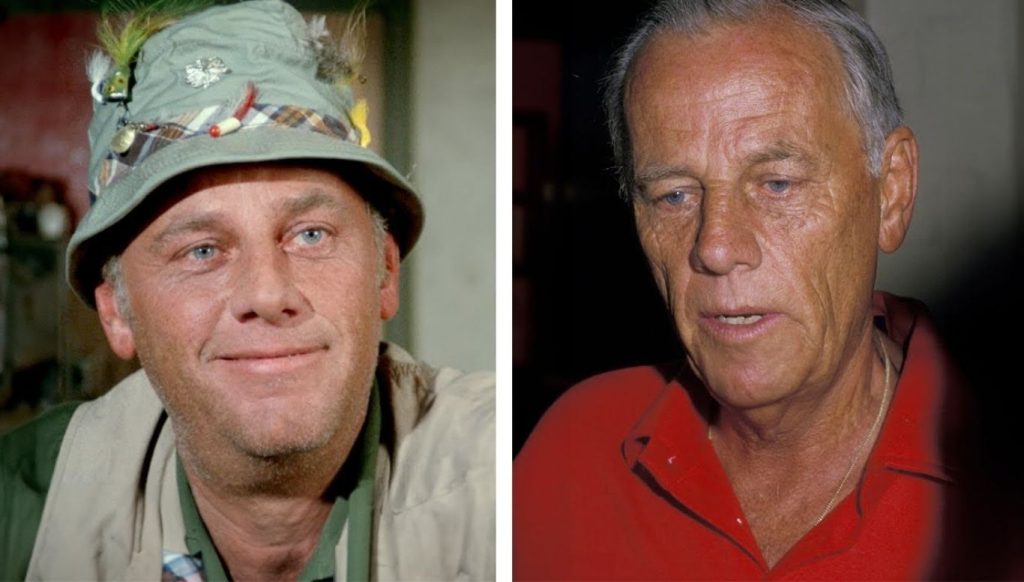
He was one of the most beloved characters on the most-watched television series of his era, and then he quit. McLean Stevenson, best known as Lieutenant Colonel Henry Blake on M*A*S*H, made a career decision in 1975 that television historians still talk about. At the time of his death on February 15, 1996, McLean Stevenson net worth was estimated at $2 million, roughly $4 million in today’s money. For a man who had a Golden Globe on his shelf and millions of fans, that figure tells a story all on its own.
This is that story: a politician’s cousin from Normal, Illinois, who sold insurance, ran a presidential press campaign, played a clown on local TV, and somehow ended up as one of the most recognizable faces of 1970s American television.
Quick Bio
| Detail | Information |
| Full Name | Edgar McLean Stevenson Jr. |
| Date of Birth | November 14, 1927 |
| Place of Birth | Normal, Illinois, USA |
| Date of Death | February 15, 1996 (aged 68) |
| Cause of Death | Heart attack (post-bladder cancer surgery) |
| Nationality | American |
| Profession | Actor, Comedian, Writer |
| Active Years | 1962 – 1993 |
| Best Known For | Lt. Col. Henry Blake on M*A*S*H (1972–1975) |
| Net Worth at Death | $2 million (~$4 million adjusted for inflation) |
| Marriages | Polly Ann Gordon (1957–1960), Louise Herbert (1969–1971), Ginny Fosdick (1980–1996) |
| Children | 3 (Jeff MacGregor, Jennifer Stevenson, Lindsey Stevenson) |
| Education | Northwestern University, B.S. Theater Arts (1952) |
| Burial Place | Forest Lawn Memorial Park, Hollywood Hills, California |
Who Was McLean Stevenson? A Quick Overview
Edgar McLean Stevenson Jr. was an American actor, comedian, and writer whose career ran from 1962 to 1993. He is remembered almost entirely for one role: the warm, chaotic, and deeply human Lieutenant Colonel Henry Blake on CBS’s M*A*S*H, a performance that earned him a Golden Globe Award in 1974 and an Emmy nomination the same year.
He left the show voluntarily after three seasons, a decision widely considered one of the most consequential self-inflicted career wounds in television history. The series went on to run for another nine years without him and became one of the highest-rated programs in broadcast history. Stevenson spent the rest of his career chasing a stardom that never quite returned. He died in 1996 at 68, while recovering from bladder cancer surgery, when he suffered a fatal heart attack.
His story sits alongside other MAS*H-era figures like Alan Alda and Gary Burghoff, though his post-show trajectory looked nothing like theirs.
Key Facts
- His middle name came from his paternal grandmother, Lottie McLean.
- He was the second cousin once removed of Adlai Stevenson II, the two-time Democratic presidential candidate, and served as press secretary during both of Stevenson’s White House campaigns in 1952 and 1956.
- His father, Dr. Edgar Stevenson Sr., was a cardiologist. McLean survived a childhood burn accident that later inspired him to co-found the Children’s Burn Foundation.
- He guest-hosted The Tonight Show Starring Johnny Carson an extraordinary 56 to 58 times, more than almost any other celebrity substitute host.
- He wrote two episodes of M*A*S*H himself, including “The Trial of Henry Blake.”
- He was the only main cast member whose character was killed off after leaving the show, a decision by producers intended to close the door permanently.
- Roger Bowen, the actor who played Henry Blake in the original 1970 MASH film, died of a heart attack the day after Stevenson, on February 16, 1996.
Early Life and Family Background
McLean Stevenson was born in Normal, Illinois, a mid-sized university town in the center of the state, on November 14, 1927. His father was a cardiologist, his extended family was politically prominent, and his childhood was marked by the kind of comfortable Midwestern respectability that rarely produces television comedians. He attended Bloomington High School, where he played sports without any particular indication that performing would become his life.
After graduation, he enlisted in the United States Navy in 1946, serving as a hospital corpsman until 1947. It was a brief tour, but it put him in proximity to medicine and military culture in ways that would later inform his portrayal of a bumbling but caring army doctor’s commanding officer. After the Navy, he attended Illinois Wesleyan University and the University of New Mexico before settling at Northwestern University, where he earned a Bachelor of Science in Theater Arts from the School of Speech in 1952.
The political connection to his family was not merely background noise. When his cousin Adlai Stevenson II ran for president in 1952 and again in 1956, McLean served as press secretary for both campaigns. He was good at it, too, but politics never captured him the way performance did. Between campaigns and early career attempts, he worked as a medical supply salesman, an insurance clerk, and a radio announcer, jobs that suggest a man casting around for direction rather than someone charging toward a destiny.
His first foothold in entertainment was, fittingly, absurd. He played a clown on local Dallas television. From there, he moved into summer stock productions in Indiana, then theatrical work in Chicago, before New York and eventually Hollywood came into view.
Career and Professional Life
The Long Road to M*A*S*H
Stevenson made his theatrical debut in a 1962 production of The Music Man. He was already 34. His entry into television was gradual, built through writing work on the satirical program That Was the Week That Was and guest appearances before he landed a recurring role on The Doris Day Show, playing magazine editor Michael Nicholson. It was solid work on a popular program, but it was a supporting role on someone else’s show.
Then came M*A*S*H.
The M*A*S*H Years (1972–1975)
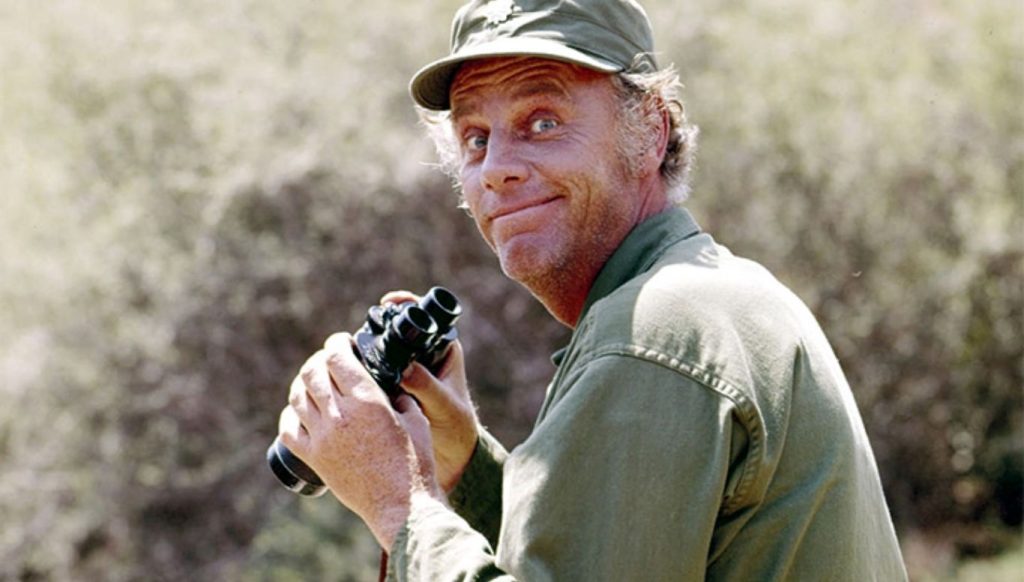
CBS launched M*A*S*H in September 1972, based on Robert Altman’s 1970 film. Stevenson was cast as Lieutenant Colonel Henry Blake, the commanding officer of the 4077th Mobile Army Surgical Hospital, a man constitutionally unsuited to military authority but genuinely good-hearted beneath the chaos. The character was a perfect vehicle for what Stevenson did best: playing warmth and incompetence simultaneously, making audiences laugh and care at the same time.
Read more: Florence Henderson Net Worth: Inside Her $10M Fortune
Full Career Timeline
| Year | Title / Role | Notes |
| 1962 | The Music Man (stage) | Theatrical debut |
| 1962–1964 | That Was the Week That Was (NBC) | Writer/performer |
| 1969–1972 | The Doris Day Show (CBS) | Michael Nicholson (recurring) |
| 1972–1975 | M*A*S*H (CBS) | Lt. Col. Henry Blake — Golden Globe 1974 |
| 1973–1983 | The Tonight Show (NBC) | Guest host 56–58 times |
| 1976–1977 | The McLean Stevenson Show (NBC) | Lead; cancelled after one season |
| 1978 | In the Beginning (CBS) | Lead; cancelled after one season |
| 1979–1980 | Hello, Larry (NBC) | Lead; cancelled after two seasons |
| 1983 | Condo (ABC) | Lead; cancelled after one season |
| 1976 | The Cat from Outer Space (film) | Supporting role |
| 1991–1993 | The Crosby Clambake (Nashville Network) | Host |
The Golden Globe he won in 1974 for Best Supporting Actor in a Series was not a courtesy award. Stevenson brought genuine craft to Henry Blake, and the writing he contributed to the show, including “The Trial of Henry Blake,” demonstrated that he understood the series’ tone from the inside.
The Decision That Defined Everything
After three seasons, Stevenson left M*A*S*H. His stated reason was a desire for more varied leading roles, a chance to carry his own show rather than support an ensemble. The producers, unable to simply write him out, made a decision that shocked the country: Henry Blake was killed. In the Season 3 finale, “Abyssinia, Henry,” a nurse reads a message stating that Colonel Blake’s plane was shot down over the Sea of Japan and there were no survivors. The episode aired in February 1975. Switchboards lit up across America.
It remains one of the most emotionally devastating moments in American sitcom history, and it was a direct consequence of Stevenson’s departure. The producers wanted to make the exit permanent and meaningful. They succeeded far beyond what anyone expected.
What followed for Stevenson was a string of network sitcoms that each failed within a season or two: The McLean Stevenson Show, In the Beginning, Hello, Larry, and Condo. None found an audience. He remained a familiar face through his prolific Tonight Show guest-hosting stints, and he worked steadily in smaller roles through the 1980s, but the leading-man stardom he had left M*A*S*H to find never materialized.
McLean Stevenson’s Net Worth in 2026
The Headline Figure
McLean Stevenson’s net worth at the time of his death in 1996 was estimated at $2 million, equivalent to approximately $4 million in 2026 dollars after an inflation adjustment. This figure, consistently cited by Celebrity Net Worth and corroborated by multiple sources, is notably modest for a man of his television profile.
The gap between his fame and his estate reflects the central financial reality of his post-M*A*S* His career: he left a show at the peak of its cultural moment, and nothing he did afterward generated comparable income.
Income Sources Breakdown
| Income Source | Notes |
| M*A*S*H salary (1972–1975) | 3 seasons as lead cast on a CBS hit network |
| The Doris Day Show (1969–1972) | Recurring role income |
| Post-MASH sitcoms (1976–1983) | Four shows; all cancelled within 1–2 seasons |
| The Tonight Show guest hosting | 56–58 appearances as a Carson substitute |
| Commercial endorsements | Spokesperson for USAir and First Alert |
| The Crosby Clambake hosting (1991–1993) | Nashville Network; modest income |
| Film appearances | Minimal: The Cat from Outer Space and others |
| Writing credits (M*A*S*H) | Two episode writing credits |
| Public service and appearances | Ongoing through the 1980s |
- The M*A*S*H years were his peak earning period. A lead cast member on one of CBS’s most-watched programs generated substantial income, but three seasons is a short window compared to the full eleven-year run his co-stars benefited from.
- The Tonight Show appearances kept him visible and paid throughout the late 1970s and 1980s, but substitute hosting fees, while meaningful, do not build wealth at the level of a starring series role.
- Commercial work for USAir and First Alert provided supplementary income during quieter years.
- The cancelled sitcoms, while each paying him a lead actor’s salary, also represent an opportunity cost: each failed show occupied time and energy that might have gone toward longer-running work.
Personal Life and Relationships
Stevenson married three times. His first marriage, to Polly Ann Gordon in 1957, lasted three years. His second, to Louise Herbert in 1969, ended in 1971 and produced a son, Jeff MacGregor. His third and final marriage was to Ginny Fosdick in December 1980, and it lasted until he died in 1996. Together, they had a daughter, Lindsey Stevenson, who appeared in a 1982 episode of The Tonight Show.
He had three children in total: Jeff MacGregor, Jennifer Stevenson, and Lindsey Stevenson.
Beyond his marriages, Stevenson was notable for his charitable work. His childhood burn accident led him to co-found the Children’s Burn Foundation, a cause he supported throughout his career. He also regularly won money on game shows and donated the proceeds to the Sisters of St. Benedict in Indiana, a community that had played a role in his early education.
Read more: Who Is Helen Soby? The Full Story of Noel Edmonds’ Ex-Wife
Marriages at a Glance
| Spouse | Married | Ended | Children |
| Polly Ann Gordon | 1957 | 1960 (divorced) | None documented |
| Louise Herbert | 1969 | 1971 (divorced) | Son: Jeff MacGregor |
| Ginny Fosdick | 1980 | 1996 (his death) | Daughter: Lindsey Stevenson |
Awards and Recognition
| Award | Category | Year | Result |
| Golden Globe Award | Best Supporting Actor, Series/TV Film | 1974 | Won |
| Emmy Award | Outstanding Supporting Actor, Comedy Series | 1974 | Nominated |
His Golden Globe win remains the most tangible formal recognition of his talent. The Emmy nomination in the same year confirmed that his work on M*A*S*H was being taken seriously at the industry’s highest levels, not simply popular with audiences.
Frequently Asked Questions
What was McLean Stevenson’s net worth when he died?
His net worth at the time of his February 1996 death was estimated at $2 million, equivalent to approximately $4 million in 2026 after inflation.
Why did McLean Stevenson leave M*A*S*H?
He left after three seasons to pursue leading roles in his own shows, believing he could build a bigger career as a series lead. None of his four subsequent sitcoms lasted more than two seasons.
How did McLean Stevenson die?
He was admitted to Encino-Tarzana Regional Medical Center in February 1996 for bladder cancer surgery. During his recovery, he suffered a fatal heart attack and died on February 15, 1996. He was 68.
Was McLean Stevenson related to Adlai Stevenson?
Yes. He was the second cousin once removed of Adlai Stevenson II, the two-time Democratic presidential candidate. McLean served as press secretary during both of Stevenson’s White House campaigns in 1952 and 1956.
What happened to Henry Blake after McLean Stevenson left M*A*S*H?
The producers killed the character. In the Season 3 finale, Henry Blake is announced dead, his plane shot down over the Sea of Japan. The scene remains one of the most remembered moments in American television history.
How many times did McLean Stevenson guest-host The Tonight Show?
Between 56 and 58 times, making him one of the most frequent substitute hosts for Johnny Carson during the show’s run.
Conclusion
McLean Stevenson left the best job he ever had, and he knew it. In interviews later in life, he acknowledged the decision openly, without self-pity but without pretending it had worked out the way he hoped. He kept working, kept showing up, kept making people laugh on The Tonight Show couch, even when his own shows were being cancelled.
The $2 million he left behind is a modest figure for a man of his profile, but it does not measure the thing that actually lasted. Henry Blake’s death is still watched, still discussed, still capable of making people cry decades after it aired. That is nothing. That is, in fact, the kind of permanence that most performers never achieve, regardless of how much they earn.

Hi, I’m Sidra Azeemi, a freelance content writer and guest post specialist with 3+ years of experience. I offer content writing and on-page SEO services. I write about celebrities, net worth, and entertainment.