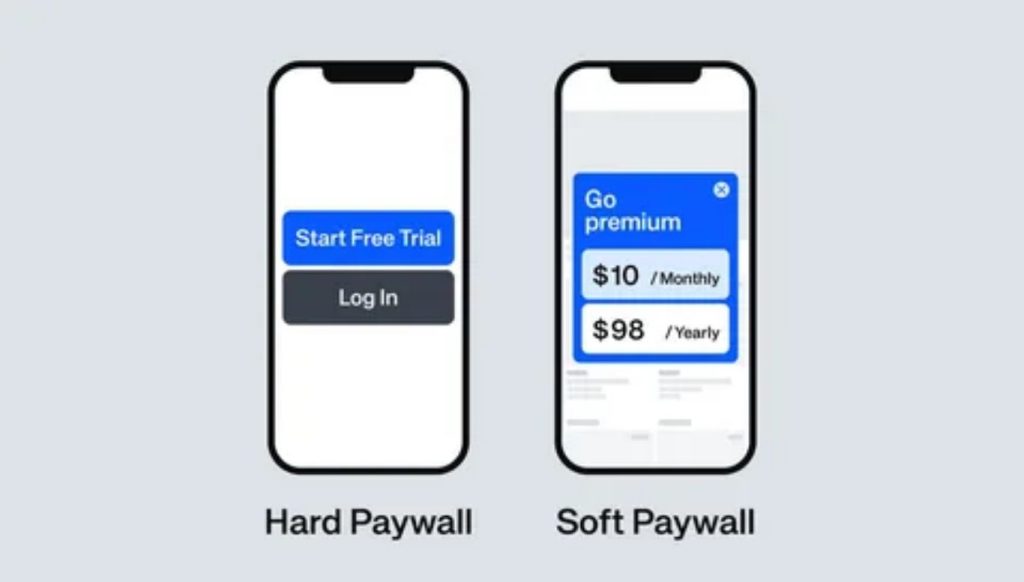
Publishers use different paywall systems depending on their audience and business model, Hard vs. Soft Paywalls. Understanding how these systems work helps readers make sense of why some sites block content instantly while others allow a few free reads each month.
What Is a Paywall, Technically Speaking
A paywall is a script running on a publisher’s website that checks whether a visitor has permission to view full content. The site typically uses cookies, browser fingerprinting, or account logins to track how many articles a reader has viewed and whether they hold an active subscription.
Quick answer: A paywall is a content-restriction system built into a website’s code. It checks a reader’s subscription status, view count, or login credentials before deciding how much of an article to display.
Hard Paywalls: Complete Restriction
A hard paywall blocks all content immediately. Visitors typically see only a headline, a short summary, and a subscription prompt. No amount of free browsing unlocks the article.
Financial and specialized publications commonly use hard paywalls because their readers are professionals who need the information for business decisions and are willing to pay for it directly. The Wall Street Journal and Bloomberg operate largely on this model.
How Hard Paywalls Work Technically
The website’s server checks the visitor’s account status before sending the full article content. If the account lacks an active subscription, the server never delivers the complete text in the first place. This differs from a soft paywall, where the full content may load in the background before a script hides it.
Soft Paywalls: Metered Access
A soft paywall allows a set number of free articles within a given period, usually a calendar month. Once the reader crosses that limit, further articles become restricted until the next cycle or until they subscribe.
Many general news outlets, including regional papers and mid-size digital publications, use this model. It lets casual readers sample content while nudging frequent visitors toward a paid subscription.
How Soft Paywalls Track Views
Soft paywalls typically rely on one or more of the following:
- Cookies stored in the browser that count how many articles a visitor has opened.
- Local storage data that persists even after cookies are cleared, in some implementations.
- Account-based tracking for logged-in users, which counts views regardless of device or browser.
- IP-based tracking in some cases, which estimates a household or network’s usage.
Because soft paywalls depend on tracking mechanisms rather than blocking content outright, the reading experience often feels less restrictive than a hard paywall, even though a limit still exists.
Quick answer: Soft paywalls count article views using cookies, local storage, or account logins, and they restrict access once a reader crosses a set monthly limit. Hard paywalls block all content regardless of view count.
Why Publishers Choose One Model Over the Other
The choice between hard and soft paywalls usually comes down to audience type and revenue strategy.
Publications targeting a narrow, high-value professional audience, such as financial analysts or industry researchers, tend to favor hard paywalls. Their readers see the content as a direct business tool worth paying for immediately.
Publications targeting a broad general audience, such as regional newspapers or lifestyle sites, often favor soft paywalls. This model builds reader loyalty over time and converts frequent visitors into subscribers gradually rather than losing casual traffic entirely.
The Role of JavaScript and Cookies
Paywall systems typically depend on JavaScript to run the scripts that count views and check subscription status. Cookies store the visitor’s session data, including how many free articles they have used.
This is a purely technical explanation of how the systems function. Readers who understand this mechanism can better appreciate why clearing cookies sometimes resets a soft paywall’s counter, and why some publishers have moved toward server-side, account-based tracking specifically to close that loophole.
Server-Side vs. Client-Side Paywalls
Older paywall systems ran mostly on the client side, meaning the browser itself handled the counting and restriction logic. This approach was easier to build but also easier to reset, since clearing browser data often reset the count.
Newer systems increasingly run on the server side, tying the view count directly to an account or a more persistent identifier. This shift reflects publishers’ efforts to build more durable subscription models and protect their revenue streams.
Frequently Asked Questions
What is the main difference between a hard and soft paywall?
A hard paywall blocks all content immediately, while a soft paywall allows a limited number of free views before restricting access.
Which publications typically use hard paywalls?
Financial and specialized publications like The Wall Street Journal and Bloomberg commonly use hard paywalls, since their audience values the content enough to pay directly.
How do soft paywalls count article views?
Soft paywalls use cookies, local storage, account logins, or sometimes IP tracking to count how many articles a reader has viewed within a set period.
Why do some publishers use server-side tracking instead of cookies?
Server-side tracking ties the view count to an account rather than the browser, making the system more durable and harder to reset than cookie-based tracking.
Does clearing cookies always reset a soft paywall?
Not always. Many publishers have shifted to account-based or server-side tracking specifically to prevent cookie clearing from resetting the view count.
Is a metered paywall the same as a soft paywall?
Yes, “metered paywall” is another common term for a soft paywall, since both describe a system that allows a limited number of free views before restricting access.
Why do lifestyle and regional news sites prefer soft paywalls?
Soft paywalls let these sites retain broad traffic and advertising reach while still converting frequent readers into paying subscribers over time.
Do all paywalls rely on JavaScript?
Most modern paywalls use JavaScript to manage view counting and subscription checks, though the underlying tracking method can vary by publisher.

Hi, I’m Sidra Azeemi, a freelance content writer and guest post specialist with 3+ years of experience. I offer content writing and on-page SEO services. I write about celebrities, net worth, and entertainment.