Cloud computing consulting is a specialized service that helps businesses plan, adopt, and optimize cloud technology. A cloud consultant evaluates a company’s existing IT infrastructure, identifies the right cloud solutions, and creates a strategy that aligns with business goals.
At its core, cloud computing consulting covers everything from cloud migration and architecture design to security, cost optimization, and ongoing management. Businesses turn to cloud consultants when they want to move off legacy systems, reduce IT costs, or scale their operations without the complexity of managing everything in-house.
Cloud computing consulting means hiring an expert or firm to guide your business through the process of using cloud technology effectively. The consultant handles strategy, migration, setup, and optimization so your team can focus on the actual work.
How Does Cloud Computing Consulting Work?

Cloud consulting follows a structured process. A consultant does not simply point businesses toward a cloud provider and walk away. The work involves multiple phases that cover assessment, planning, deployment, and long-term support.
Phase 1: Infrastructure Assessment
The consultant reviews your current IT setup. This includes hardware, software, data storage, workflows, and existing pain points. The goal is to understand what works, what does not, and what the cloud can fix.
Phase 2: Cloud Strategy and Roadmap
Based on the assessment, the consultant builds a customized cloud strategy. This roadmap outlines which workloads move to the cloud, which platform fits best (AWS, Azure, or GCP), the migration timeline, and the expected ROI.
Phase 3: Migration Planning and Execution
Cloud migration is one of the most complex parts of the process. The consultant plans the data transfer, application reconfiguration, and testing to reduce downtime. They also handle integration with existing tools and systems.
Phase 4: Security and Compliance Setup
Cloud security does not happen automatically. Consultants implement access controls, encryption, compliance frameworks (such as GDPR or HIPAA), and monitoring systems that protect business data from day one.
Phase 5: Optimization and Ongoing Support
After migration, the consultant monitors cloud performance and spending. They identify where resources get wasted, adjust configurations, and make sure the business only pays for what it actually uses.
Types of Cloud Computing Consulting Services
Not every business needs the same type of support. Cloud consulting breaks down into several specialized service areas.
Cloud Strategy Consulting
This covers the big-picture planning stage. Strategy consultants help businesses decide whether to go public, private, hybrid, or multi-cloud. They align the cloud approach with business objectives before any technical work begins.
Cloud Migration Consulting
Migration consultants handle the transition from on-premises or legacy systems to cloud platforms. They manage application porting, data migration, testing, and cutover without disrupting day-to-day operations.
Cloud Architecture Consulting
Architecture consultants design the technical structure of the cloud environment. This includes selecting the right compute, storage, networking, and database services that power the business applications reliably and efficiently.
Cloud Security Consulting
Security consultants focus on protecting cloud infrastructure from threats. They implement identity and access management, encryption, firewall configurations, vulnerability scanning, and compliance auditing across AWS, Azure, or GCP.
Cloud Cost Optimization Consulting
These consultants analyze cloud spending and reduce waste. They identify overprovisioned resources, unused instances, inefficient storage tiers, and help businesses move to the right pricing model, whether pay-as-you-go or reserved instances.
Managed Cloud Consulting
Some businesses prefer an ongoing partnership. Managed cloud consultants handle day-to-day cloud operations, monitoring, patching, and support, so internal teams do not have to manage the infrastructure themselves.
AWS vs Azure vs GCP: Which Platform Do Cloud Consultants Work With?
| Platform | Best For | Market Share |
| AWS (Amazon Web Services) | Startups, global reach, widest service catalog | 31% (Q4 2023) |
| Microsoft Azure | Enterprise, Microsoft-heavy environments, hybrid cloud | 26% (Q4 2023) |
| Google Cloud Platform (GCP) | Data analytics, AI/ML, containerized workloads | 11% (Q4 2023) |
A good cloud consultant works across all three major platforms. The right choice depends on your existing tech stack, budget, industry compliance needs, and the specific workloads you plan to run.
AWS suits businesses that want maximum flexibility and a global infrastructure footprint. Azure fits enterprises already using Microsoft tools like Windows Server and Active Directory. GCP works best for data-heavy and AI-driven operations where BigQuery and Kubernetes play a central role.
Benefits of Cloud Computing Consulting
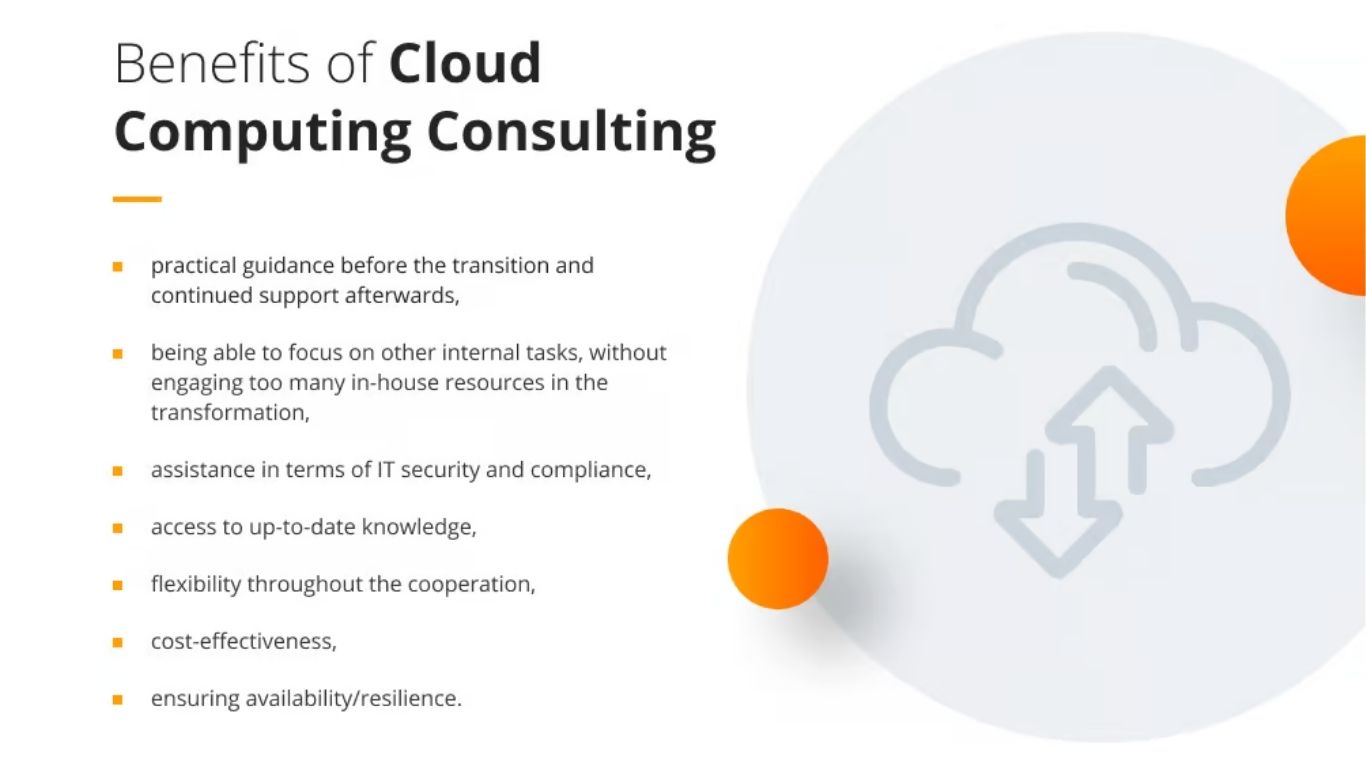
Hiring a cloud consultant delivers measurable advantages that go beyond just moving data to a server.
Faster Cloud Adoption
Structured consulting frameworks accelerate cloud adoption timelines. Businesses that work with consultants avoid the trial-and-error phase that slows down in-house teams. Some frameworks cut adoption timelines by up to 40%.
Cost Reduction
Cloud consultants identify cost-saving opportunities that most businesses miss on their own. They analyze consumption patterns, right-size resources, and build spending controls that prevent cloud bill surprises.
Access to Specialized Expertise
The global shortage of skilled cloud professionals is real. Most businesses do not have in-house staff trained in AWS, Azure, and GCP simultaneously. A consulting firm brings that expertise without the overhead of full-time hiring.
Improved Security Posture
Security misconfigurations account for a significant percentage of cloud breaches. Consultants build security into the cloud architecture from the start rather than treating it as an afterthought.
Business Continuity
Cloud consultants design disaster recovery and backup systems that keep businesses running even when hardware fails or cyberattacks occur. Data redundancy and rapid recovery plans minimize downtime and protect revenue.
Scalability Without Complexity
Consultants set up environments that scale up or down based on demand. A business can add or remove cloud resources as workloads change without touching physical hardware or paying for idle capacity.
How Much Does Cloud Computing Consulting Cost?
Cloud consulting pricing varies depending on scope, platform complexity, and the experience level of the firm.
| Engagement Type | Typical Cost Range |
| Hourly Rate | $50 to $250 per hour |
| Project-Based Fee | $5,000 to $50,000+ per project |
| Monthly Retainer | Varies based on scope |
| Average Platform Rate (Clutch data) | $100 to $149 per hour |
Smaller businesses with straightforward migration needs sit on the lower end of these ranges. Enterprise projects involving multi-cloud environments, compliance-heavy industries, or large-scale legacy system overhauls push costs higher.
The key is to evaluate the total cost against the long-term savings. Over 80% of organizations that moved from on-premises to cloud infrastructure reported measurable cost benefits after the transition, according to Deloitte’s Future of Cloud Survey.
How to Choose the Right Cloud Computing Consultant
Picking the wrong consultant wastes money and delays transformation. These are the factors that matter most.
Align on Business Goals First
The best consultants start by understanding your objectives: cost reduction, faster deployment, improved security, or market expansion. Avoid firms that pitch a generic solution before understanding your specific situation.
Check Platform Certifications
Verify that the consultant holds active certifications on the platforms relevant to your business. AWS Certified Solutions Architect, Microsoft Azure Solutions Expert, and Google Cloud Professional certifications are the gold standard.
Review Case Studies and References
Look for documented success stories from businesses similar to yours. A consultant with healthcare experience understands HIPAA compliance. A firm with e-commerce clients understands traffic spikes and uptime requirements.
Evaluate Security and Compliance Knowledge
Ask specifically how the consultant handles regulatory requirements in your industry. GDPR, HIPAA, ISO 27001, and SOC 2 compliance are not optional in most sectors. A responsible firm treats security as part of the architecture, not an add-on.
Assess Ongoing Support Capabilities
Cloud migration is the beginning, not the end. Confirm whether the consultant offers post-migration support, performance monitoring, and optimization services so you do not get left with a live environment and no guidance.
Common Mistakes Businesses Make Without Cloud Consulting
Many organizations attempt cloud adoption without expert guidance and run into predictable problems. Understanding these mistakes clarifies why professional consulting adds real value.
Businesses frequently underestimate migration complexity. Moving applications to the cloud involves more than copying files. Databases, application dependencies, and network configurations all need to be rebuilt for the cloud environment.
Without a cost management strategy, cloud bills climb unexpectedly. Pay-as-you-go pricing is a feature, but without monitoring and optimization, businesses pay for idle resources they never needed in the first place.
Security gaps appear when teams configure cloud services without proper knowledge. Open storage buckets, weak identity management, and missing encryption create vulnerabilities that attackers exploit within hours of going live.
FAQs
What does a cloud computing consultant do?
A cloud consultant helps businesses plan, migrate, secure, and optimize their cloud environments. They assess existing infrastructure, design cloud architecture, manage migrations, and provide ongoing optimization and support.
Is cloud computing consulting only for large enterprises?
No. Small and mid-sized businesses benefit from cloud consulting just as much as large enterprises. In fact, SMBs often gain the most value because they lack in-house cloud expertise and benefit immediately from cost savings and scalability.
How long does a cloud migration take with a consultant?
Simple migrations for small businesses can take a few weeks. Complex enterprise migrations involving multiple applications, compliance requirements, and hybrid cloud setups can take several months.
What is the difference between a cloud consultant and a managed service provider?
A cloud consultant focuses on strategy, design, and migration. A managed service provider (MSP) handles day-to-day operations and ongoing management after the environment is live. Some firms offer both services.
Can a cloud consultant reduce my existing cloud bill?
Yes. Cost optimization is one of the most common reasons businesses hire cloud consultants. They audit existing cloud spending, eliminate waste, and restructure configurations to bring costs down without sacrificing performance.
What certifications should a cloud consultant have?
Look for AWS Certified Solutions Architect, Microsoft Certified Azure Solutions Architect, or Google Cloud Professional Cloud Architect certifications, depending on your platform of choice.
What industries use cloud computing consulting the most?
Healthcare, finance, retail, manufacturing, and technology sectors use cloud consulting heavily due to regulatory requirements, data volume, and the need for scalable infrastructure.
What is a cloud readiness assessment?
A cloud readiness assessment evaluates your current IT infrastructure to determine how prepared your systems, team, and processes are for a cloud migration. It is usually the first step in any cloud consulting engagement.
Do I need a cloud consultant if I already use cloud services?
Yes, many businesses that already use cloud services hire consultants for optimization. Moving to the cloud is one step; extracting maximum value from it is another challenge entirely.
What is multi-cloud consulting?
Multi-cloud consulting involves helping businesses manage workloads across multiple cloud providers simultaneously, and for example, running some applications on AWS while keeping analytics workloads on GCP.
How do cloud consultants handle data security during migration?
Consultants use encryption for data in transit and at rest, implement strict access controls, create backups before migration begins, and conduct security audits after migration is complete.
What questions should I ask a cloud consultant before hiring?
Ask about their experience with your specific industry, their certifications, how they handle cost overruns, what their migration methodology looks like, and what post-migration support they provide.

Hi, I’m Sidra Azeemi, a freelance content writer and guest post specialist with 3+ years of experience. I offer content writing and on-page SEO services. I write about celebrities, net worth, and entertainment.