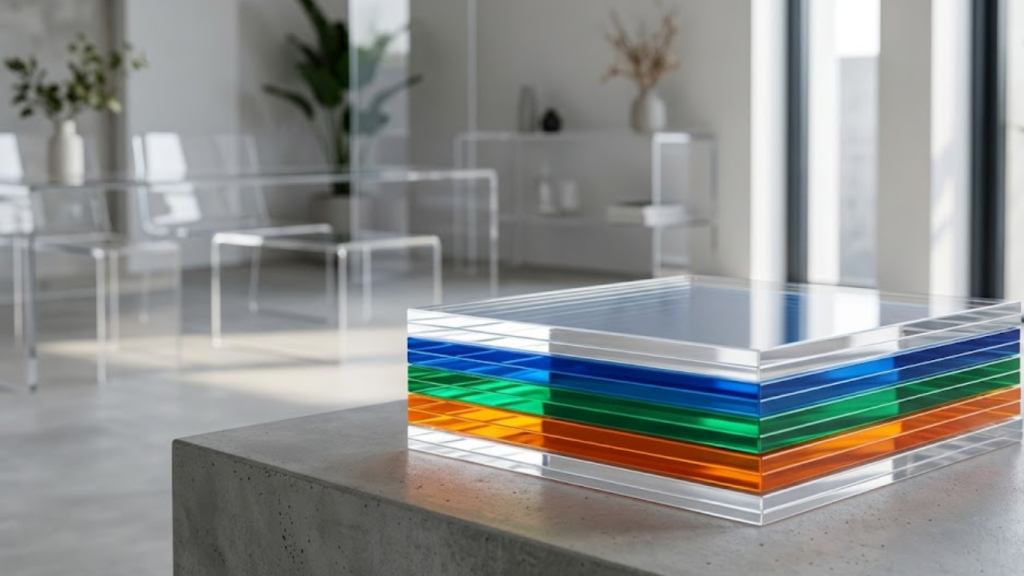
“Akrylika” refers to acrylic-based materials, including acrylic paint, PMMA sheets, and decorative acrylic surfaces used across art, design, construction, and industry. This synthetic, quick-drying, and highly versatile medium has become a top choice for artists, architects, manufacturers, and interior designers worldwide.
Whether you are painting a canvas, installing a commercial display, or designing a modern interior, understanding akrylika helps you make smarter, more informed material choices in 2026.
What Is Akrylika?
Akrylika describes products made from acrylic polymers, which are synthetic plastics developed through controlled chemical processes. The most widely used form is PMMA, also known as polymethyl methacrylate, acrylic glass, or plexiglass. The term is used across Polish, Greek, and several other European languages as the native word for acrylic, making it both a material descriptor and a regional language term.
Akrylika covers a broad range of products, including acrylic sheets and panels, acrylic paint for art and decoration, surface coatings, fibers, and acrylic-based industrial components. Its origins trace back to the early 20th century, when advances in polymer science made acrylic materials commercially viable for the first time.
Over the following decades, improved production techniques brought UV resistance, expanded color ranges, and stronger weathering performance to akrylika. By the latter half of the century, it had entered mainstream art movements as painters discovered its flexibility and quick-drying advantages over traditional media like oil and watercolor.
Key Properties and Characteristics of Akrylika
Akrylika stands out because of a specific combination of physical and chemical properties that few other materials can replicate across such a wide range of applications.
Optical Clarity and Light Transmission
Akrylika offers near-glass-level light transmission, which makes it ideal for display panels, windows, protective covers, and decorative installations. Its clear surfaces maintain a clean, modern appearance without the weight and fragility that glass carries.
Lightweight Yet Strong
Compared to glass, akrylika is significantly lighter while maintaining strong impact resistance. This reduces installation difficulty, cuts transportation costs, and lowers the risk of breakage during handling, which is a major advantage in commercial displays and large-scale interior projects.
Weather and UV Resistance
High-quality akrylika resists UV rays and weathering very effectively, preserving both color and structural integrity over time. UV-resistant grades are especially important for outdoor installations where prolonged sun exposure would degrade lesser materials quickly.
Easy to Shape and Fabricate
Akrylika can be cut, bent, drilled, polished, and molded into custom shapes with relative ease. This fabrication flexibility supports both large-scale industrial production and detailed bespoke design work, from architectural features to small craft and art projects.
Main Types of Akrylika
Akrylika comes in several distinct forms, each designed for a specific range of applications.
Acrylic sheets made from PMMA are the most widely used type in construction, commercial display, and architectural projects. They are lightweight, shatter-resistant, and optically clear, which makes them a reliable substitute for glass in many settings.
Acrylic paint is the form most familiar to artists and creative professionals. It is a water-based medium that dries quickly, adheres to canvas, wood, fabric, paper, and a variety of other surfaces, and delivers vibrant, long-lasting color.
Decorative acrylic surfaces are used in interior design for wall panels, furniture, store displays, and branding installations. They are available in smooth, frosted, colored, and mirrored finishes to suit different aesthetic requirements.
Solid acrylic surfaces are used in countertops, bathroom fittings, and interior panels where durability and consistent color are priorities. They resist staining and are easy to repair when scratched or damaged.
Applications of Akrylika Across Different Industries
One of akrylika’s greatest strengths is how effectively it performs across completely different industries and contexts.
Art and Creative Projects
Artists use akrylika paint on canvas, wood, fabric, and paper. Its fast drying time allows layering without long waits between sessions. Mural artists favor it for large-scale outdoor and indoor projects because it retains color brilliance and resists fading. It also works seamlessly with collage elements, digital prints, and mixed media techniques, making it central to contemporary art practice.
Interior Design and Architecture
In interiors, akrylika appears as partitions, lighting fixtures, decorative panels, furniture surfaces, shelves, and countertops. It supports contemporary aesthetics naturally by offering smooth, consistent finishes in both transparent and colored forms. Designers choose it when they need a material that delivers visual impact without adding weight to a structure.
Construction
Builders use akrylika sheets for window panels, skylights, sign panels, and protective covers where lightweight clarity is needed without the fragility of glass. It reduces load on structures and speeds up installation compared to traditional glazing materials.
Industrial and Technical Uses
Industrial environments rely on akrylika for protective screens, machine guards, laboratory equipment, aquarium tanks, and applications that require a combination of chemical resistance and visual clarity.
Commercial and Retail Applications
Retail environments use akrylika for display stands, product cases, exhibition panels, and branded installations. Clear surfaces allow customers to see products without obstruction while the professional finish elevates overall presentation quality.
Benefits of Using Akrylika
Aesthetic Versatility
Akrylika comes in vibrant colors, frosted finishes, and fully transparent forms. Artists and designers can mix custom hues, achieve rich textures, and adapt the material to almost any visual style, from minimalist interiors to bold abstract paintings.
Enhanced Safety
Unlike glass, akrylika is shatter-resistant. When it breaks, it does not produce sharp shards, which significantly reduces injury risk in public spaces, retail environments, and homes. This safety advantage makes it the preferred choice in schools, hospitals, and family spaces.
Cost Effectiveness
Its durability, lightweight nature, and ease of fabrication make akrylika economical over the full project lifecycle. Lower transportation costs, simpler installation, and a long service life reduce overall project expenses compared to glass or traditional alternatives.
Ease of Use and Clean-Up
Acrylic paint cleans up with soap and water without requiring any solvents, which is a major advantage over oil paints. Akrylika surfaces stay easy to maintain with mild detergents and a soft cloth, and spills during use are straightforward to manage.
Adaptability Across Industries
From fine art to industrial manufacturing, architecture to retail display, akrylika performs across multiple settings without needing significant modification. Very few materials cover this range with the same level of effectiveness.
Akrylika vs Other Materials
Akrylika vs Glass
Akrylika is lighter, safer when broken, easier to shape, and simpler to install than glass. It does scratch more easily than glass, but for the majority of applications, its practical advantages outweigh this limitation significantly.
Akrylika vs. Traditional Glass
| Feature | Akrylika (PMMA) | Traditional Glass |
| Weight | 50% lighter than glass | Heavy |
| Impact Resistance | 10-17 times stronger | Fragile / Shatters |
| Clarity | Up to 92% light transmission | Standard (can have green tint) |
| Safety | Shatter-resistant (no shards) | Dangerous sharp shards |
| Fabrication | Easy to cut, bend, and mold | Difficult and requires high heat |
Akrylika vs Oil Paints
Akrylika dries far faster than oil paint, which allows artists to build layered compositions without waiting days between sessions. It is waterproof once dry, simpler to clean up, and more flexible for technique changes during a session. Oil paint offers longer blending time but lacks akrylika’s speed and practicality.
Akrylika vs Watercolors
Watercolors produce soft washes but lack the opacity, vibrancy, and surface versatility that acrylics deliver. Akrylika covers techniques from thin transparent glazing to heavy impasto texture, a range that no single traditional medium matches on its own.
Painting Techniques for Akrylika
Artists who work with akrylika have access to a wide variety of techniques that make it one of the most expressive media available today.
Layering involves building depth by applying thin coats progressively over a base. Glazing dilutes the paint with water or a medium to create transparent washes. Impasto applies paint thickly with a brush or palette knife to create heavy, dimensional texture. Dry brushing drags a semi-dry brush across a surface to create soft, organic textural effects. Smooth gradients use airbrush tools to blend tones without visible transitions.
Artists use flat brushes for broad coverage, fine-tipped brushes for detail work, palette knives for scraping and texture building, and retarders to slow drying time when extended blending is needed.
Common Akrylika Painting Techniques
| Technique | Method | Visual Effect |
| Glazing | Thin, transparent layers | Luminous, deep color depth. |
| Impasto | Thick, undiluted application | 3D texture and visible brushstrokes. |
| Dry Brushing | Using very little paint on a dry brush | Scratchy, organic, and weathered look. |
| Washing | Diluting with water (like watercolor) | Soft, translucent, and flowing. |
Famous Artists Who Used Akrylika
Several major artists built significant bodies of work using akrylika and shaped how the medium is understood in art history.
David Hockney created bold landscapes and portraits that demonstrated akrylika’s capacity for depth and rich color. Bridget Riley used it for precise optical art with sharp geometric patterns and high-contrast color fields. Mark Rothko produced emotionally resonant color field paintings that explored the full tonal range the medium makes possible. Julie Mehretu created contemporary layered works combining abstraction, dynamic line work, and complex compositional depth.
Challenges and Limitations of Akrylika
Akrylika performs exceptionally well in most applications, but it does carry some limitations that users should understand before specifying or purchasing it.
It scratches more easily than glass, so surfaces require soft cloths and non-abrasive cleaning products to maintain their quality. It is also sensitive to high heat and can warp or deform if exposed to extreme temperatures, which means it is not suitable for heat-intensive applications without specialist treatment. Maintaining optical clarity over time requires consistent and careful cleaning with mild detergents.
Emerging Trends in Akrylika for 2026
Eco-Friendly and Recyclable Formulations
Sustainability is driving significant change in how akrylika is produced. Manufacturers in 2026 are actively developing recyclable acrylic formulations that maintain full performance while reducing environmental impact. This shift responds to growing demand from architects, designers, and brands committed to sustainable material sourcing.
Integration With Smart and Digital Design
Modern architecture increasingly embeds akrylika with integrated LED lighting, touch interfaces, and digital displays. Applications in 3D printing, augmented reality, and interactive retail environments are expanding what akrylika can do beyond its traditional roles.
Customization and Personalization
Advanced fabrication technologies now allow fully bespoke akrylika products with custom shapes, finishes, and colors tailored to specific design requirements. This level of personalization is opening new opportunities across retail design, branded architecture, and contemporary art installations.
Conclusion
Akrylika is a genuinely versatile material that bridges art, design, construction, and industry. Its clarity, strength, lightweight nature, and adaptability make it effective across an unusually wide range of applications, from acrylic paint on canvas to PMMA panels in modern architecture.
With sustainable production gaining momentum and digital integration expanding in 2026, akrylika will remain a cornerstone of both creative and functional design for years ahead. Whether you are an artist exploring new mediums or a professional specifying materials for a large project, understanding akrylika’s properties, types, and best practices gives you a real and meaningful advantage.
FAQs
What is akrylika made of? Akrylika is made from acrylic polymers, most commonly PMMA. These synthetic plastics are produced through controlled chemical processes and are valued for their transparency, strength, and lightweight properties.
Is akrylika the same as “acrylic”? Yes, “Akrylika” is the Polish and Greek language term for “acrylic.” It refers to the same family of acrylic polymer materials used worldwide in art, construction, and industry.
Can beginners use akrylika paint? Yes. Akrylika paint is well-suited to beginners. It dries quickly, cleans up with soap and water, works on multiple surfaces, and does not require solvents or special handling equipment.
How do you clean akrylika surfaces? Use a soft cloth with mild soap or a gentle detergent. Avoid abrasive cleaners, rough cloths, and harsh chemicals. Regular gentle cleaning preserves optical clarity and prevents surface hazing.
Is akrylika UV-resistant? Standard akrylika has moderate UV resistance. For outdoor installations, you should always select UV-resistant grades, which maintain color, clarity, and structural integrity under prolonged sun exposure.

Hi, I’m Sidra Azeemi, a freelance content writer and guest post specialist with 3+ years of experience. I offer content writing and on-page SEO services. I write about celebrities, net worth, and entertainment.