Table of Contents
Your phone rings. The number is unfamiliar. You pause for a split second and ask yourself the exact question millions of people ask every single day: Who is calling me, and should I answer? In May 2026, that moment of hesitation is more justified than ever.
According to the UK Finance Annual Fraud Report published in May 2025, British consumers lost over £1.1 billion to fraud in 2024, with 17% of all authorised push payment fraud cases starting through a telecommunications call.
Whocallsme is a free reverse phone lookup tool built to answer that one question before you pick up, and this guide tells you everything about how it works, what it can and cannot do, and exactly how to use it safely.
What Is Whocallsme? The Direct Answer
Whocallsme is a free, community-powered reverse phone lookup directory. You type in any unknown number, and the site shows you reports submitted by real users who have received calls from that same number. You can see what happened when others answered, what type of call it was, and whether the number has been flagged as dangerous, suspicious, or safe.
The site works without registration, without payment, and without downloading anything to your device. You search from a browser on any phone, tablet, or computer, get a result in seconds, and decide whether to call back, block, or ignore.
Whocallsme is part of a broader category of tools called reverse phone lookup services. These are platforms where the user enters a number, and the platform returns information about who that number belongs to or what kind of calls it has made. What sets whocallsme apart from paid alternatives is that its core function is entirely free and driven by user-submitted community reports rather than purchased data.
What Does Whocallsme Do?
Whocallsme is a free reverse phone lookup tool that lets you check any unknown phone number before calling back or answering. You enter the number into the search bar and see community reports from other users who received calls from that number. Reports include the call type (scam, spam, telemarketing, safe), written comments about what happened, and warning flags. No registration is needed.
The Scale of the Problem Whocallsme Helps Solve
Before understanding the tool, it helps to understand why it exists. The UK’s phone scam problem in 2026 is not a minor inconvenience. It is a documented national crisis.
Ofcom, the UK’s communications regulator, reported in October 2025 that half of all UK mobile users received a suspicious message via text or iMessage between November 2024 and February 2025. An estimated 100 million suspicious messages were reported to mobile operators through Ofcom’s 7726 reporting service in the year to April 2025. Fraud now accounts for an estimated 41% of all crime in England and Wales, according to the National Crime Agency’s 2025 National Strategic Assessment of Serious and Organised Crime.
The personal cost is severe. A government survey cited in UK Finance’s 2025 half-year report found that 86% of fraud victims felt anger following an incident, 73% reported significant stress, and 63% experienced ongoing anxiety. At the most serious end, 18% of victims reported depression.
These are the conditions that make a tool like whocallsme genuinely useful. When you can check a number before engaging with it, you break the chain before a scammer can establish the trust they need to steal from you.
How Whocallsme Works: Step by Step
Using whocallsme takes about thirty seconds. Here is the exact process.
Step One: Go to the Site
Open your browser and go to whocallsme.com. You do not need to create an account. The site loads on any device and works without any app download. This matters when you need to check a number quickly while a call is still ringing or just ended.
Step Two: Enter the Number
Type the full phone number into the search bar exactly as it appeared on your screen, including the country code if shown. In the UK, this would typically start with 01, 02, 03, 07, or an international prefix like +44. Hit search.
Step Three: Read the Reports
The results page shows you the call type tag, the number of reports already filed, and comments from other users. Read them carefully. Look for patterns. One negative report might be a mistake or a misunderstanding. Five reports all saying the same caller claimed to be from HMRC is a strong signal.
Understanding the Call Type Tags
Whocallsme and similar services use colour-coded or text-based tags to categorise calls quickly. The main categories you will see are:
- Scam: the caller was attempting to defraud the recipient in some way
- Spam: the call was unsolicited and unwanted, usually promotional
- Telemarketing: a sales call from a real business, legal but often unwelcome
- Debt collection: a collector calling about unpaid bills
- Safe: a legitimate caller, often a business or known organisation
- Unknown: no reports yet, no category assigned
Step Four: Make Your Decision
Based on the tag and comments, decide what to do. If the number has multiple scam reports, do not call back. Block it immediately on your device. If the comments describe a legitimate business you recognise and were expecting to hear from, you can call back with confidence.
Step Five: Add Your Own Report
If you received a call and the number is not yet listed, or has very few reports, add your own. Your experience helps the next person who searches for that number. Community reports are the entire engine that makes whocallsme work. Every report added makes the next search more accurate.
What Types of Calls Can Whocallsme Help You Identify?
Whocallsme covers a wide range of call categories that people search for in 2026. Understanding each one helps you read the reports more accurately.
Phone Scam Calls
Scam calls are the most dangerous category. The caller is attempting to steal money, personal data, bank details, or account credentials. Common tactics in 2026 include impersonating HMRC, claiming there is a warrant for your arrest, pretending to be from your bank or broadband provider, and offering refunds for services you never purchased.
The National Crime Agency’s 2025 report noted that in March 2024, the NCA shut down a platform called “Russian Coms” that had been responsible for over 1.3 million scam calls to 500,000 UK phone numbers. This single operation had used spoofed numbers from financial institutions, telecoms companies, and law enforcement agencies to defraud victims of tens of millions of pounds worldwide. Whocallsme community reports often flag spoofed numbers that tools like basic caller ID cannot catch.
Spam and Telemarketing Calls
Spam and telemarketing calls are not criminal, but they are disruptive and time-wasting. They can promote anything from solar panels and insurance to accident claims and PPI refunds. These calls are legal in some cases and illegal in others, depending on whether the caller has your consent to contact you.
Whocallsme reports on these numbers often include specific details about what was being sold, which helps you decide quickly whether to engage or block.
Ping Calls
A ping call rings once and disconnects before you can answer. The goal is to make you curious enough to call the number back, often connecting you to a premium-rate line that charges several pounds per minute. Ofcom has tracked ping call abuse for years, and whocallsme users frequently flag these numbers with comments warning others not to return the call.
Robocalls and Recorded Message Calls
Robocalls use an automated, pre-recorded voice. They are often the opening stage of a scam, telling you that your National Insurance number has been suspended, your Amazon account is compromised, or your broadband is being cut off. Whocallsme reports that robocall numbers frequently include the specific script the automated voice used, which makes them highly recognisable.
Debt Collection Calls
Debt collectors are required by law to identify themselves clearly, but some callers misrepresent themselves as debt collectors when they are not. Whocallsme reports on debt collection numbers can help you verify whether a number belongs to a known, legitimate debt collection agency before engaging.
Whocallsme vs Other Reverse Phone Lookup Tools
Many tools exist in this space in 2026. Understanding how whocallsme compares helps you choose the right tool for different situations.
| Feature | Whocallsme | Truecaller | Hiya | Who-Called.co.uk |
| Cost | Free | Free basic, paid premium | Free basic, paid premium | Free |
| Registration required | No | Yes (app required) | Yes (app required) | No |
| Real-time caller ID | No | Yes (app only) | Yes (app only) | No |
| Community reports | Yes | Yes | Limited | Yes |
| UK-focused database | Yes | Global | Global | Yes |
| Call blocking | Manual | Automatic (app) | Automatic (app) | Manual |
| Privacy (no contact upload) | Yes | No (uploads contacts) | No (uploads contacts) | Yes |
| Works on any browser | Yes | No | No | Yes |
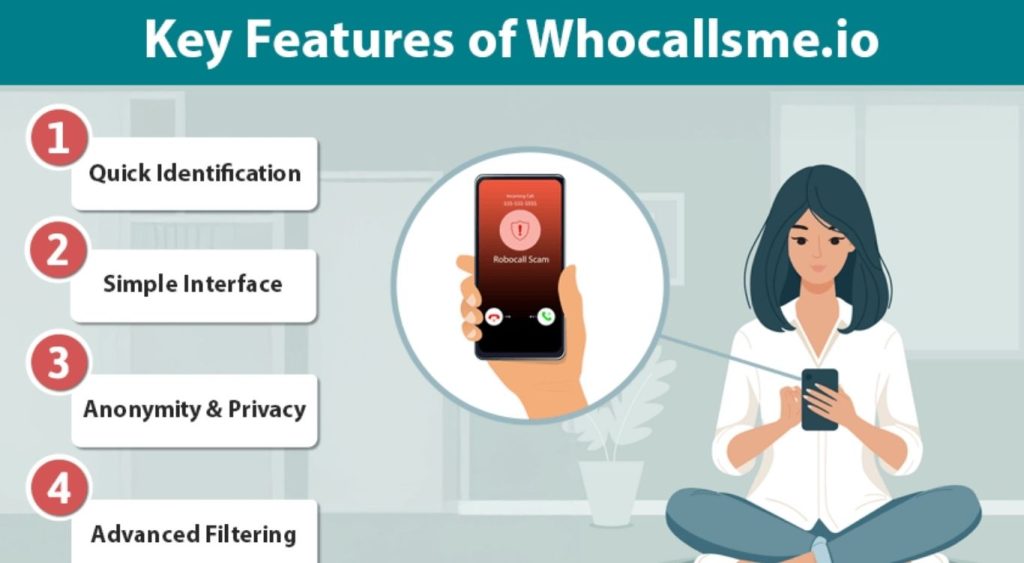
The key advantage whocallsme holds over app-based tools is privacy. Apps like Truecaller and Hiya work by uploading your phone’s contact list to their servers. This gives them a richer database but means your contacts’ data is shared without their knowledge or consent. Whocallsme does not ask for any personal information. You search anonymously every time.
The key disadvantage compared to apps is the lack of a real-time caller ID. Whocallsme does not show a pop-up when your phone rings. You have to actively go to the site and search for a missed call or while a suspicious call is in progress. For people who want automatic protection, an app-based tool may be more suitable as a complement rather than a replacement.
The Unique Risk Whocallsme Users Often Miss in 2026
Almost every guide to reverse phone lookup tools covers what to do when a number has lots of reports. Almost none of them cover what to do when a number has no reports at all, and this gap is where many people get hurt.
When you search a number on whocallsme and see zero reports, it is tempting to treat this as a green light. The number is unknown, so surely it must be fine. But in May 2026, professional scam operations rotate phone numbers rapidly, specifically to stay ahead of databases like whocallsme. A number with no reports might have been active for four hours before it called you. The absence of reports is not evidence of safety. It is simply evidence that no one has filed a report yet.
When you find a number with no reports, apply these rules. Do not call back until you have independently verified who the caller is through a source you already trust, such as the official website of the organisation they claimed to represent. If the caller left a voicemail, listen to it carefully and check the number against the organisation’s published contact details before dialling anything.
A good test: a legitimate caller will leave a message, give you their name, and tell you what the call was about. A scammer will often just hang up or leave a vague, alarming message designed to make you call back urgently. Urgency is always a red flag.
How Do I Use Whocallsme to Check a Number?
Go to whocallsme.com on any browser. Type the full phone number into the search bar and press search. The site will show you community reports from other users who received calls from that number. You will see a call type tag (scam, spam, telemarketing, or safe), written comments describing what happened, and the number of reports filed. No registration or payment is needed. If the number has no reports, search it independently before calling back
How to Report a Scam Call Using Whocallsme
Adding your own report to whocallsme takes about two minutes and directly helps other people. Here is how to do it.
After receiving a suspicious call, go to whocallsme.com and search the number. On the result page, look for the option to add a report or comment. Select the most accurate call type from the available categories. In the text field, describe what happened as specifically as possible. Include what the caller said, what they claimed their name or organisation was, what they asked you to do or share, and whether you lost any money or gave out any details.
Specific details are far more useful than vague warnings. “The caller said they were from HMRC and that I owed £2,400 in unpaid tax and would be arrested within the hour if I did not pay by iTunes gift card” is a genuinely helpful report. “Scam call, beware” helps no one choose whether to call back.
After filing with whocallsme, you should also report scam calls to the relevant UK authorities:
- Text scam messages: forward to 7726 (free, works on all UK networks, reported to Ofcom)
- Phone scam calls: report to Action Fraud at actionfraud.police.uk or by calling 0300 123 2040
- Calls from people impersonating your bank: call 159 to reach your bank directly and verify
Protecting Elderly and Vulnerable People from Phone Scams
Phone scam operations specifically target older adults. The Cifas Fraudscape 2025 report, published in April 2025 and based on data from the National Fraud Database, found that victims aged 61 and over were the most targeted age group in 2024, making up 29% of all fraud filings.
Scammers target older people because they are statistically more likely to answer unknown calls, less likely to have heard of the specific scam tactic being used, more likely to be alone when the call comes, and more likely to comply with requests that feel official or authoritative.
Whocallsme is a practical tool to introduce to older relatives. Show them how to search a number before calling back. Set up the site as a browser bookmark on their phone or tablet. Walk through one example search with them so the process feels familiar before they need it under pressure.
For additional protection, encourage elderly relatives to register their landline with the Telephone Preference Service (TPS), the UK’s official opt-out register for unsolicited sales and marketing calls. While TPS cannot stop criminal scam calls, it removes legitimate telemarketers from the picture, making it easier to identify that any remaining unknown calls are higher-risk.
What Whocallsme Cannot Do: Honest Limitations
Whocallsme is useful, but it is not a complete solution on its own. Knowing its limits makes you safer, not less safe.
The database depends on community reports. If a number has received no reports yet, whocallsme has no information to show you. New scam numbers launched within hours of your call will not appear. Rapidly rotated numbers used by professional criminal operations are the hardest for any community-driven tool to track.
Whocallsme cannot block calls automatically. It is a research tool, not a security app. You must take manual action after consulting it. This means it is reactive, not proactive. You check after a missed call rather than being warned before you answer.
The site cannot verify whether a caller is who they claim to be. Even if a number has no negative reports, the caller may still be attempting fraud using a number not yet flagged in any database. Spoofed numbers, where the display number on your phone is faked to look like a legitimate organisation, are a growing tactic. Ofcom confirmed in July 2025 that it was proposing new guidance requiring telecoms companies to block international calls that imitate UK mobile numbers, specifically because number spoofing had become so prevalent.
Practical Tips to Stay Safe from Phone Scams in 2026
These habits, combined with regular use of whocallsme, provide strong practical protection against the most common phone fraud tactics in May 2026.
Never call back a missed call from an unknown number without searching it first on whocallsme or another lookup tool. The missed call may be a ping call designed to draw you into a premium-rate line.
If a caller claims to be from your bank, hang up and call the number on the back of your debit or credit card. Never use a number the caller gives you or one found in a message they sent. Dial 159 to reach most major UK banks directly.
Treat urgency as a warning sign. Legitimate organisations do not threaten arrest, account suspension, or fines in the next sixty minutes. Any call that pressures you to act immediately without time to verify is almost certainly a scam.
Never pay anything using gift cards, cryptocurrency, wire transfers, or unusual payment methods. No legitimate organisation, including HMRC, the police, or your bank, will ever ask you to pay in gift cards.
Register your landline and mobile on the Telephone Preference Service at tpsonline.org.uk. The Direct Marketing Association manages this free service and legally requires legitimate UK businesses to remove your number from their marketing lists.
Frequently Asked Questions About Whocallsme
What is whocallsme and is it free?
Whocallsme is a free reverse phone lookup tool. You enter any unknown phone number and see community reports from other users who received calls from that same number. No registration, payment, or app download is needed. The core lookup function is entirely free.
How accurate are the reports on whocallsme?
Real users submit reports based on their personal experience with a number. Accuracy depends on the quality and quantity of reports filed. Numbers with many reports across multiple users tend to be highly reliable. Numbers with only one report, or no reports at all, require independent verification before you act.
Does whocallsme work in the UK?
Yes. Whocallsme covers phone numbers from the UK and many other countries. It is particularly useful for UK users because a significant proportion of its database comes from UK-based reports. UK landline and mobile numbers can both be searched.
Can whocallsme block spam calls for me?
No. Whocallsme is a research tool, not a call-blocking application. After checking a number and identifying it as spam or a scam, you must block it manually on your phone. On iPhones, go to the recent calls list, tap the information icon next to the number, and select Block this Caller. On Android, open the Phone app, press and hold the number in your recent calls, and select Block.
What should I do if whocallsme shows no results for a number?
No results means no community reports have been filed yet. It does not mean the number is safe. Before calling back, try an independent search using the number and the name or organisation the caller claimed to represent. Check against official contact pages. If the caller left a voicemail demanding urgent action or payment, treat it as suspicious regardless of what the lookup shows.
Is it safe to report a number on whocallsme?
Yes. Adding a report on whocallsme does not require you to share your own phone number or any personal details. You describe what happened and submit it anonymously. Your report helps other people who later search the same number.
How is whocallsme different from Truecaller?
Truecaller is an app that provides real-time caller ID by uploading your contact list to its servers. Whocallsme is a browser-based tool that does not require any data from your phone. Truecaller identifies callers automatically when your phone rings. Whocallsme requires you to search manually after a call. Whocallsme is better for privacy. Truecaller is better for real-time convenience.
Can scammers see that I searched their number?
No. Whocallsme does not notify the owner of a number when it is searched. Your search is anonymous. The person or organisation behind the number has no way of knowing you looked them up.
How do I report a scam call to Ofcom or Action Fraud?
You cannot report directly to Ofcom, but you can forward scam text messages to 7726 (free on all UK networks), which reports them to your mobile provider who works with Ofcom. For phone scam calls, report to Action Fraud at actionfraud.police.uk or by calling 0300 123 2040. If you believe the call involved impersonation of a bank, call 159 to reach your bank directly.
Does whocallsme store my searches?
Whocallsme does not require you to log in, and your searches are not linked to an account. However, as with any website, standard anonymised web traffic data may be collected by the site or third-party analytics tools. For full privacy when searching sensitive numbers, consider using a private browsing window.
Conclusion
Whocallsme fills a real gap in everyday personal security. It costs nothing, takes thirty seconds to use, requires no account, and puts collective community intelligence at your fingertips before you decide whether to answer or call back an unknown number. In May 2026, when UK fraud losses topped £1.1 billion in 2024 alone and Ofcom estimates that 100 million suspicious messages hit UK phones every year, that thirty-second habit is genuinely worth building.
Use whocallsme as your first step. Report every suspicious call you receive. Combine it with the 7726 reporting service for texts and Action Fraud for financial crime. The more people report, the sharper the database becomes, and the harder it gets for scammers to keep rotating their way around detection.
The knowledge that you checked before you acted is the simplest, most effective form of protection available in 2026.
For a detailed overview of how reverse phone lookup technology works and its legal context in the UK, see the Wikipedia article on telephone number.

Hi, I’m Sidra Azeemi, a freelance content writer and guest post specialist with 3+ years of experience. I offer content writing and on-page SEO services. I write about celebrities, net worth, and entertainment.